
- Live Online Instructor-Led Training: Learn the MEAN Stack through live online sessions with instructor explanations of the technologies and their interactions. You can ask questions and clarify technical concepts during the sessions.
- Understand Full-Stack Architecture: Explore how Angular, Node.js, Express.js and MongoDB work together in an application. Understanding the complete request-and-response flow helps you see how front-end and back-end components communicate.
- Develop JavaScript Programming Skills: Strengthen your understanding of JavaScript concepts used across the stack, including functions, objects, asynchronous operations and modules. This shared language helps reduce the need to switch between different programming languages for front-end and back-end development.
- Learn Angular Application Development: Study Angular components, templates, services, dependency injection and routing. These concepts help you organise application interfaces and manage communication between different parts of the front end.
- Build Server-Side Knowledge with Node.js: Understand how Node.js handles server-side JavaScript execution, asynchronous operations and application requests. This knowledge is useful when developing back-end services and APIs.
- Work with Express.js and REST APIs: Learn how Express.js uses routes and middleware to process HTTP requests and return responses. You can develop an understanding of API endpoints and how applications exchange data.
- Understand MongoDB Data Management: Explore documents, collections, queries and data modelling in MongoDB. These skills help you understand how application information can be stored and retrieved using a document database.
- Improve Application Debugging Skills: Understand common issues across the client, server and database layers. Learning to inspect errors, trace requests and test API responses can improve your approach to troubleshooting.
- Develop Skills for Business Applications: Relate MEAN Stack technologies to use cases such as customer portals, inventory systems, dashboards and online services. This helps you understand how full-stack development supports business requirements.
- Build Knowledge for Professional Development: Develop a broad foundation in front-end and back-end JavaScript development. This knowledge can complement skills in Git, TypeScript, cloud platforms, testing and software deployment.
MEAN Stack Certification Training Course
Ratings: 4.9 - 2,125 reviews
★★★★★ Rated 5 out of 5
Mean Stack Online training at CourseJet introduces learners to full-stack JavaScript development using MongoDB, Express.js, Angular and Node.js. These technologies work together to support the development of dynamic web applications, from the user interface to server-side processing and database operations. The training covers JavaScript, Angular components, Express routing, Node.js, REST APIs, MongoDB data modelling and application integration. Through 100% live online instructor-led training, learners can build an understanding of how the different layers of a web application communicate and work together. The course is suitable for aspiring full-stack developers, front-end and back-end developers, and software professionals who want to expand their skills across the JavaScript technology stack.
2321+
Total Learners
30 Hrs
Course Duration
15 Hrs
Assignments Duration
100%
Job Oriented Training
24/7
Students Support

CourseJet's Training Modes
Learn from World’s top MEAN Stack Certified faculty and industry leaders
Online Batch Training
One To One Training
Customized Training
Fast Track Training
Corporate Training
Upcoming Batch Schedule
Check out our MEAN Stack online certification batch timings. Does this batch not suits your timings? No worries, we will customize and arrange the batch timings that match you perfectly to your interest.
16-11-2026
Weekdays Regular (Class 1Hr - 1:30Hrs) / Per Session.
(Monday - Friday) Time: 08:00 AM (IST)
WEEK DAY
14-11-2026
Weekend Regular (Class 3Hrs) / Per Session.
(Saturday - Sunday) 11:00 AM (IST)
Week End
19-11-2026
Weekdays Regular (Class 1Hr - 1:30Hrs) / Per Session.
(Monday - Friday) Time: 08:00 AM (IST)
WEEK DAY
15-11-2026
Weekend Regular (Class 3Hrs) / Per Session. (Saturday - Sunday) 11:00 AM (IST)
Week END
16-11-2026
Weekdays Fast-track (Class 3Hrs - 4Hrs) / Per Session. (Monday - Friday) 10:00 AM (IST)
FAST TRACK
14-11-2026
Weekend Fast-track (Class 5Hrs - 6Hrs) / Per Session. (Saturday - Sunday) 11:00 AM (IST)
Fast Track
Can’t find a batch you were looking for?
Get Flexible Batch Timings according to your Interest
Best MEAN Stack Certification Online Course
MEAN Stack is a full-stack JavaScript technology combination used to develop web applications across the front end, server side and database layer. The name represents MongoDB, Express.js, Angular and Node.js, with each technology performing a distinct role in the application architecture. MongoDB provides document-oriented data storage, Express.js supports server-side routing and middleware, Angular handles the client-side interface, and Node.js runs JavaScript on the server. Together, these technologies support data-driven applications, business portals, e-commerce platforms and internal enterprise tools.
The training explores how these components communicate through HTTP requests and REST APIs, as well as how application data is stored, retrieved and updated. CourseJet delivers the programme through 100% live online instructor-led sessions, helping learners understand the relationships between the different layers of a full-stack application. Learners can develop skills in JavaScript-based application development, database operations, API design, front-end integration and debugging. These capabilities can support professional development in web engineering and full-stack software development.
Benefits of Learning MEAN Stack at CourseJet
Drop us a Query
About MEAN Stack Course
The MEAN Stack follows a layered architecture in which the browser-based interface communicates with server-side application logic, which in turn interacts with a database. Angular, the front-end framework, manages the presentation layer through components, templates, services and routing. TypeScript is commonly used when developing Angular applications.
Node.js provides the server-side JavaScript runtime, while Express.js offers a framework for defining routes, handling middleware and building HTTP APIs. When a user submits a form or requests information, the Angular application can send an HTTP request to an Express endpoint running on Node.js. MongoDB stores application information as BSON documents organised into collections. Developers can use queries and data modelling techniques to create, retrieve, update and delete records. The application can connect to MongoDB through a suitable Node.js driver or object data modelling library.
This architecture is used in applications such as e-commerce platforms, customer relationship management systems, booking portals, content management tools and operational dashboards. Professional MEAN Stack development also involves authentication, input validation, error handling, security practices, testing and deployment. Understanding how these areas fit together helps developers maintain applications across the complete development lifecycle.
The main objective of MEAN Stack training is to develop the technical knowledge required to understand and build full-stack web applications using MongoDB, Express.js, Angular and Node.js. Learners can work towards the following objectives:
- Understand the MEAN Stack architecture and the responsibilities of its four technologies.
- Strengthen JavaScript and TypeScript knowledge for application development.
- Create Angular components, templates, services and routes.
- Understand Node.js modules, asynchronous programming and server-side execution.
- Develop Express.js routes and REST API endpoints.
- Connect Node.js applications to MongoDB and perform database operations.
- Understand HTTP communication, JSON data exchange and front-end/back-end integration.
- Explore application debugging, validation, authentication concepts and deployment workflows.
MEAN Stack knowledge can support career development in full-stack and web application development. Developers who understand Angular, Node.js, Express.js and MongoDB can contribute to both the user-facing and server-side parts of an application. This combination is relevant to organisations building web portals, business applications, e-commerce platforms and data-driven services.
The skills can be useful for roles such as MEAN Stack Developer, Full-Stack Developer, Angular Developer, Node.js Developer and JavaScript Developer. Knowledge of REST APIs, database design, Git, testing and application security can strengthen your technical profile. You can also extend your capabilities through TypeScript, cloud platforms and DevOps practices. Career opportunities depend on your practical ability, project experience and wider software engineering knowledge, not simply on completing a training programme.
The course is relevant to learners who want to work across the front-end and back-end layers of JavaScript applications. Suitable audiences include:
- Aspiring full-stack developers who want to understand complete web application development.
- JavaScript developers looking to expand into server-side programming and databases.
- Angular developers who want to learn Node.js, Express.js and MongoDB.
- Node.js developers interested in building front ends with Angular.
- Front-end developers who want to develop back-end and database skills.
- Back-end developers who want to understand client-side application development.
- Software engineering students and graduates preparing for web development roles.
- Working web developers who want to broaden their knowledge of the JavaScript ecosystem.
A basic understanding of programming concepts is recommended. Familiarity with JavaScript, HTML and CSS will help learners understand how the different MEAN Stack components work together. Knowledge of objects, functions, arrays and asynchronous programming is particularly useful. Beginners may enrol if they are prepared to build these foundations before progressing to full-stack topics. Prior experience with Angular, Node.js or MongoDB is helpful but is not essential for an introductory learning pathway. A computer with a modern browser and a code editor such as Visual Studio Code is recommended; confirm any additional setup requirements with CourseJet.
CourseJet’s batch size and available training formats should be confirmed before enrolment. CourseJet to confirm whether MEAN Stack sessions are conducted in batches of 2–3 learners. Smaller groups can allow more opportunities to discuss code, ask questions and clarify concepts across Angular, Express.js, Node.js and MongoDB. CourseJet to confirm whether one-to-one training is available. Contact CourseJet to check the current batch options and availability.
MEAN Stack Course Curriculum
Our MEAN Stack Course Curriculum encompasses all the course modules with a clear description and the concepts covered in each module. CourseJet designs the syllabus in the learner's perspective to provide comprehensive knowledge.
- JavaScript with ECMAScript
- Exponentiation (**) (ECMA Script 2016)
- Array.findIndex()
- Array.find()
- Default parameter values
- JavaScript Classes
- JavaScript Arrow Functions
- JavaScript const
- JavaScript let
- JavaScript let
- New Features in ES6
- Iterators and Iterables
- Generators
- Modules
- Promises
- Static Properties and Methods
- Inheritance
- Classes
- De-structuring
- Object Literal Improvements
- Template Literals
- Arrow Functions
- Spread and Rest Operators
- Block Scope, Let & Const
- A Word on Bable
- ES6 Module System
- What is ES6 (ECMAScript 6/JavaScript 6)
- History of JavaScript
Application
- Node and MongoDB Application
MongoDB
- Documents Operations
- Collection Operations
- Database Creation, Drop
- Connecting Node and MongoDB
Scaling Application
- Enter and Leave Animations
- Appear Animation
- Add a CSS File
- Install React CSS Transitions Group
Restful API
- Other Components
- Reducers
- Store
- Root Component
- Actions
- Create Files and Folders
- Install REDUX
Express Framework
- Flux Props
- Flux Elements
- What is Flux
Web Modules
- Create Components
- Add a Router
- Install a React Router
Utility Modules
- What is Keys
- Using Keys
Global Objects
- Using Refs
- What is Refs
File System
- Child
- Simple
Streams
- Complex
- Simple
Buffers
- Lifecycle Methods
Event Emitter
- Find Dom Node
- Force Update
- Set State
Event Loop
- Validating Props
Call backs Concept
- State and Props
- Using Props
- Default Props
Packager Manager (NPM)
- Create a Module
- Searching Module
- Updating Module
- Using packages.json
- Attributes of packages.json
- Uninstalling Module
- Global vs Local Installation
- Installing Modules using NPM
REPL Terminal
- Stopping REPL
- REPL Commands
- Starting REPL
- What is REPL
First Application
- Creating a NodeJs Application
- Make a request to NodeJs Server
Environment Setup
- Installation
- Executing
- Download NodeJs
- Text Editor
- NodeJs Run Time
Node.JS: (Node.JS Coding Standards & Best Practices)
Introduction
- Where to use
- Where not to use
- Concepts
- Who use Node
- Features
- About Node
- Execute Node
- Pre-requisites
- Audience
Advanced Concepts of Express.JS
- Debugging
- Scaffolding
- REST FUL API’s
- Authentication
- File Upload
- Sessions
- Cookies
- Database
- Form Data
- Static Files
- Templates
- Middleware
- URL Building
- HTTP Methods
- Routing
- POST
- GET
- Response
- Request
Express.JS Basics
- Basic Application
- Environment Setup
- Introduction, Advantages
Event Emitter
- Force Update
- Set State
Methods
- Skip ()
- Sort ()
- Limit ()
CRUD Documents
- Query Documents
- Delete Documents
- Update Documents
- Insert Documents
Collection
- Create Collection
- Drop Collection
Database
- Drop Database
- Create Database
Environment Setup
- MongoDB Datatypes
- MongoDB Data Model
- MongoDB Shell
- Install MongoDB
MongoDB Basics
- Advantages over RDBMS
- History, Features
- No SQL Databases
- Introduction, Advantages
Back-end services, HTTP Client
- Setup installing the module
- Making a request for JSON data
- Type checking the response
- Error handling
- Sending data to the server
- Making a POST request
- Configuring other parts of the request
RxJs Primer
- Schedulers
- Subscription
- Subject
- Streams
- Operators
- Observable interface
- Why RxJs
- Introduction
Angular Routing with Guards
- Prefetching Data for a Component using Resolve
- CanActivate and CanActivateChild Guards in Angular
- CanDeactivate Guard in Angular
- Introduction to Route Guards in Angular
- Path Match and Route Types
- Implementing Child Routes
- Abstracting the user link to a separate component
- Implementing Routing in an Angular App
Dependency Injections
- Value
- Factory
- Class
- Provider Types
- Registering the service with Ng Module using providers key
- Custom service development
- @Injectable decorator
- Why DI
- Introduction
Angular Forms
- Resetting the value of a form
- Adding Asynchronous Custom Validations to your Reactive Form
- Adding Synchronous Custom Validations to your Reactive Form
- Form Array(s)
- Dynamically Adding or Removing Form Control (s) or Form Group (s) using
- Reactive form in Angular
- Types of Form in Angular
Angular Directive and Pipes
- Pure and Impure Pipes in Angular
- Creating Custom Pipes in Angular
- Introduction to Pipes in Angular
- Using Built-in Pipes
- Building Custom Structural Directives
- Building Custom Attribute Directives
- Built in Attribute Directives
- Introduction to Directives
- Built in Structural Directives
Data binding
- uses and examples
- Event binding
- Property binding
- two-way binding
- Interpolation
Templates in Angular
- Safe navigation operator
- Template reference variables
- @Input ()
- @Output
- Attribute, class, and style bindings
- Template syntax
- Template expressions
- HTML basic syntax
Components in Angular
- Angular Elements
- Inline
- External
- Component with Styles
- External
- Component with templates
- Inline
- Component configuration object
- Custom components
- @Component decorator
- Introduction
Angular Modules
- feature module
- Root Module
- Built-in modules
- How to create modules
- Why modules
Angular building blocks
- Angular Ivy
- Services
- Dependency injection
- Directives
- Templates
- Metadata
- Data binding
- Components
- Modules
Angular CLI
- Using the Angular Language Service with Microsoft VS Code
- Debugging Angular apps
- Working with Augury
- Adding support for external libraries using ng add
- Updating Angular apps using ng update
- Angular CLI
- Anatomy of the project
- Setting up a workspace
All about TypeScript
- Decorators
- Default
- Introduction to Modules
- Import / Export
- Implementing interface
- Extending interface
- Optional properties and methods
- Strict structural contract
- Getters and setters
- Read-only & static
- Introduction to Interfaces
- Introduction to Classes
- Inheritance
- Access modifiers
- Arrow functions
- Using types in functions
- Function as types
- Optional and default parameters
- Introduction to Functions
- Never
- Null and Undefined
- Void
- Any
- ENUM
- Tuple
- Array
- String
- Boolean
- Number
- Type Annotations
- Type inference
- Introduction to Types
- Rest and Spread Parameters (ES6)
- De-structuring (ES6)
- Template Literals (ES6)
- Scoping using let and const Keywords (ES6)
- Different typescript versions
- Typescripts 3.8 for Angular 10
- IDE support
- Setup and installation
- What is Typescript
- Why Typescript
- Introduction
Angular Overview
- Platform for Targeting Native Mobile not just Web Browsers
- Supported Browsers (Angular 10)
- Community
- Full-featured Framework
- Performance
- Desktop Application class User Experience
- Productivity and Tooling
- Angular 10 vs Angular 9
- The leap from AngularJS to Angular
- What’s new in Angular 10
- History of Angular
Angular Advanced Features
- Creating Libraries
- Angular Material Essentials
- Lazy Loading
- Customizing the Angular CLI using the Builder API
- Server Side Rendering with Angular Universal
- Working with Service Workers
- Building a Progressive Web App
Testing
- Creating Libraries
- Angular Material Essentials
- Lazy Loading
- Customizing the Angular CLI using the Builder API
- Server Side Rendering with Angular Universal
- Working with Service Workers
- Building a Progressive Web App
Learn Deployment
- Manually
- Using the Angular CLI with ahead-of-time (AOT) Compilation and
- Tree-Shaking (removing unused library code)
- Deployment Platforms for Angular Apps
All the above concepts will be covered in Our MEAN Stack Course. You will become a master in all the concepts of MEAN Stack because our trainers will make you learn very effectively. Our main goal is to make students satisfied with the training and place them in the top companies.
All the above concepts will be covered in Our MEAN Stack Course. You will become a master in all the concepts of MEAN Stack because our trainers will make you learn very effectively. Our main goal is to make students satisfied with the training and place them in the top companies.
MEAN Stack Course Features
CourseJet offers the best MEAN Stack online training with advanced features. Our world-class features will provide zeal for the learners to enroll for top training courses.
Instructor-led Sessions
30 to 45 Hrs of MEAN Stack Online Live Instructor-Led Classes.
Expertise Faculties
Our Faculties are working MEAN Stack Professionals in MNC Companies.
Certification & Job Assistance
After Successful completion MEAN Stack course you will receive Globally Recognized CourseJet Certificate.
100% Job Oriented Training
MEAN Stack Live project based on any real time scenarios.
Lifetime Access
You get lifetime access which includes MEAN Stack class recordings and Materials.
Flexible Schedule
We will provide you Convenient Class Batches with lifetime access to our 24x7 online support team.
MEAN Stack Certification Training
Get the Globally Recognized MEAN Stack certification training from CourseJet under the guidance of MEAN Stack Experts. CourseJet teaches you all the MEAN Stack concepts with global standards.
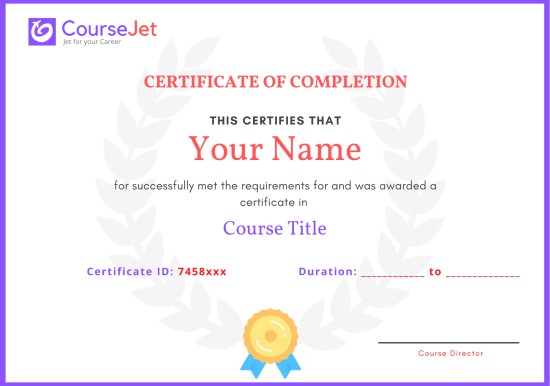
CourseJet’s MEAN Stack programme provides an opportunity to study the technologies involved in full-stack JavaScript development in a structured learning environment. Live online instructor-led sessions can help learners understand how Angular, Node.js, Express.js and MongoDB work together within an application.
You can develop knowledge of front-end components, server-side routing, REST API communication, database operations and application integration. These skills are relevant to broader web development work and can provide useful preparation for exploring technology-specific credentials, such as MongoDB’s Associate Developer certification. The training supports technical learning, but external certification examinations have separate eligibility, assessment and registration requirements.
CourseJet to confirm whether a course completion certificate is issued for MEAN Stack training. The provider’s certificate eligibility criteria, attendance requirements, assessments and completion process also require confirmation. If issued, the certificate would represent completion of CourseJet’s training programme under its stated conditions. It would not be the same as an external professional credential, such as the MongoDB Associate Developer certification, which is awarded separately by MongoDB after meeting its examination requirements. Learners should verify the relevant certificate details with CourseJet before enrolment.
A CourseJet course completion certificate, if offered, would document participation in or completion of its MEAN Stack training programme. It should not be described as a globally recognised vendor certification unless independent accreditation or recognition can be verified. Employers may evaluate training certificates alongside practical coding ability, technical interviews, professional experience and project work. External credentials, such as MongoDB certifications, are issued by their respective providers and have separate assessment requirements. Learners should check the issuing organisation, credential scope and current recognition details when choosing a certification pathway.
There is no single official certification examination that covers the complete MEAN Stack as a combined technology suite. However, learners can explore individual credentials that validate knowledge of specific technologies within the stack. MongoDB offers the MongoDB Associate Developer Exam, which assesses MongoDB development knowledge and includes programming-language-specific content for Node.js, among other supported languages.
This certification pathway can help learners demonstrate database development knowledge, including working with MongoDB in application development. It does not assess the complete Angular, Express.js and Node.js stack, so learners should review the official exam objectives before preparing.
CourseJet’s 100% live online instructor-led training can help learners develop the technical foundations relevant to MEAN Stack development and selected certification pathways. A CourseJet course completion certificate, if available, is separate from a professional credential issued by MongoDB. CourseJet to confirm whether a course completion certificate is provided and specify the applicable requirements.
Get personalized 1-1 course consultation
Career-Focused Course Material and Personal Coaching to get Job.
MEAN Stack Projects
CourseJet not only provides you with the best MEAN Stack training but also makes you work with real-world projects and case studies to help you gain practical knowledge.
- Practical knowledge is very important to understand how things actually work. To put your all learning into action, you will be required to work on two industry-based live projects that will discuss the real-time use cases.
- CourseJet MEAN Stack Training will help you gain in-depth knowledge of all the essential concepts of MEAN Stack through real-world examples and hands-on projects.
- We make each and every individual work on MEAN Stack real-time projects to face challenges during the learning period so it will be very helpful to solve problems arising in organization while in the job.
- Working with real-time projects will make more efficient and you will get more doubts. This type of working procedure will help you achieve a lot more things in your career.
Develop a professional portfolio Now!
Complete real-time projects, to showcase your skills to employers.
MEAN Stack Trainer Profile
You will learn the MEAN Stack essentials from the expert’s trainers who hold 10+ years of real-time experience in handling diversified projects.
10+ Years Experienced
Our MEAN Stack Trainers are more than 10+ Years of experience.
Working in Top MNCs
Our MEAN Stack Trainers are Working in a top MNC company around the globe.
Trained 2000+ Students
Our MEAN Stack Trainers are Trained more than 2000+ Students in MEAN Stack Courses.
Certified Professionals
Our MEAN Stack Trainers are certified MEAN Stack Professionals with Strong Practical Knowledge.
Certification Guidance
Our MEAN Stack Trainers will help you in getting International Certification if available.
Completed 700+ Batches
In CourseJet, we already finished many batches successfully with certifications.
MEAN Stack Training Reviews
Our Best MEAN Stack Teaching methodology has acquired millions of students around the globe and they shared their success stories in the form of reviews.
✎ 2125
Total Reviews
✪ 4.9
Review score
✉ 99%
Course Completions
I have enrolled CourseJet through one of my friends, but after joining I must say it was excellent, the sessions are well planned, and the trainer is very knowledgeable in explaining each and every topic in detail through practical executions which helped me to clear Certification. The support system is very helpful in solving my issues at any point of time during training sessions.

It’s a great learning experience at CourseJet, I completed the this Training last month. The way the trainer delivered classes on implementing real-time scenarios on Course Modules are very informative to clear certification exams.

I have recently completed my online training from CourseJet. That was a really very excellent learning experience for me and also helped in clearing Certification. The trainer is highly knowledgeable and skilled - he completed all the concepts on time. Thanks to CourseJet.
The trainer is highly experienced in dealing with real-time projects and explained each and every course modules in-detail that helped me to understand even better and secure a good job. I highly recommend CourseJet to my colleagues.
The trainer is highly experienced in dealing with real-time projects and explained each and every course modules in-detail that helped me to understand even better and secure a good job. I highly recommend CourseJet to my colleagues.
CourseJet is the best place for aspirants who are aiming for a bright career in this domain. It really helped me in getting the highest position in my career. CourseJet is the best place to get all the Training.
CourseJet training is the best place to gather, garner, and garden the knowledge for all around the globe on all courses. Training at CourseJet delivered the best and helped me in clearing the Certifications. This is a very good institute for learning Course and the training quality is appreciable and practical sessions were very good.
Recently, I have joined the CourseJet for this Certification training. Their team is working excellently with well-mannered trainers who are experts in the field. The support team is available 24*7 to provide support and clear doubts. Trainers are well experienced in training and clarifying doubts.
MEAN Stack Jobs & Placements
CourseJet has tie-up with small, medium, and large scale corporations across the world. We provide you with the complete placement assistance by forwarding your resume to the companies we tie-up with.
MEAN Stack skills can be relevant to organisations developing web applications, customer-facing platforms and internal business systems. Potential career paths include MEAN Stack Developer, Full-Stack Developer, Angular Developer, Node.js Developer and JavaScript Developer. These roles may involve building user interfaces, developing REST APIs, managing databases, integrating application components and maintaining software.
Employers may seek knowledge of JavaScript, TypeScript, Angular, Node.js, Express.js, MongoDB, API integration, Git and application debugging. Additional experience with automated testing, cloud deployment, security and performance optimisation can also be valuable.
CourseJet’s live online instructor-led training can help learners build a foundation in these technologies. CourseJet to confirm the availability of interview preparation, CV guidance, career mentoring and job opportunity updates. Developing a portfolio and gaining practical experience can further support recruitment preparation. Training can contribute to professional development, but it does not guarantee employment or placement.
CourseJet to confirm the placement assistance available for MEAN Stack learners.Prospective learners should check whether the programme includes interview preparation, CV guidance, career advice or information about relevant job opportunities. The availability, duration and eligibility conditions of these services should be confirmed directly with CourseJet before enrolment. Placement assistance, where offered, is intended to support career preparation rather than guarantee a job. Building application examples and practising technical interview questions can also help learners demonstrate their understanding of Angular, Node.js, Express.js and MongoDB during recruitment.
According to the survey like Glassdoor and PayScale’s latest reports shows that MEAN Stack Certified Professionals are earning an average of $120,000/- Per year in the United States. It will be based on countries, Total Year of Experience, Performances and more. Our MEAN Stack Training leads you to get more salary than the average salary as mentioned above.
Salary levels for MEAN Stack professionals vary according to job title, experience, location, employer and technical specialisation. Certification alone does not determine compensation; employers generally consider practical development skills and the complexity of applications a candidate can build and maintain.
For context, Glassdoor’s India salary information for MEAN Stack Developers reports an average base salary of approximately ₹5 lakh per year, with a displayed base-pay range of around ₹3 lakh–₹6 lakh per year. This is a reported market estimate, not a guaranteed salary or a figure specific to CourseJet learners.
Professionals with experience in Angular, Node.js, Express.js, MongoDB, TypeScript, cloud services and software architecture may qualify for different opportunities as their skills develop. Actual offers can differ considerably between companies and locations.
Get your dream job in a month
Join the program to meet the Industries recruitment process
FAQ of MEAN Stack Training
CourseJet FAQs are designed to clear most of your doubts and also help you build power in yourself to get clarified with the rest of doubts related to that course.
Yes, We offering group discounts when you join as more than three people 10% to 30% Price discount will be provided. We also have a referral discount for those who have already enrolled in our training. Terms and conditions apply.
Yes, we will share sample recordings of this course which was recorded during the live class. It will give you a good idea about the classes and the training sessions.
You need not worry if you miss a class because CourseJet provides live recordings of the sessions so that you can go through them just before you attend the next session. If it is one to one training classes then will be rescheduled at your convenience.
CourseJet is the Best Online Training platform, it provides high-class services for the learners. CourseJet provides Job Assistance for the learners and also helps them in getting placed in top MNCs around the world. CourseJet offers 24/7 support, best course material, and videos.
The different modes of training offered by CourseJet are as follows:
- Instructor-led training
- Corporate training
- Self-paced training
Upon successful completion of this training, you will receive Course Completion Certification from CourseJet. It is a Globally Recognized Certification in top MNCs across the world. CourseJet certification is also recommended by top experts.
Yes, CourseJet provides 100% job assistance for the learners to help them get placed in top MNCs. Our trainers will help to create perfect resumes, will share the top interview questions, tutorials and necessary software installation guides.
CourseJet Job assistance program will train you to achieve your dream job by referring your resume to tied up companies and also assisting with preparing your resumes and providing important interview questions. We will help you in the all dimension between you and recruiters companies and the final selection decisions is always depends on the recruiter by the candidate’s performance in the interview.
Yes, it is possible by paying some extra charges and can continue learning the course from the next batch.
The system requirements required to attend this training are:
- An operating system such as Mac OS, Windows, Linux.
- 4 GB RAM
- Dual-core CPU
We are Experts in corporate training by Upgrading your team member’s skills. So, please get in touch with our team through fillup the corporate training Form or contact us via our Mail Id or Phone.
Payments can be made using any of the following options like Debit Card / Credit Card, American Express, Master Card, or PayPal and a receipt of the same will be issued to you automatically via email.
Related Courses
CourseJet provides training for a large number of courses. We have more than 250+ courses on our website and also provide assistance for the participants in suggesting the best training course.
Recently Added Blogs
CourseJet provides you with a large number of learning resources. We have more blogs on our websites and more number of learning resources will be added on a regular basis.
Related Searches
mean stack training
mean stack course
mean stack certification
mean stackclasses
mean stack online training
mean stack certification training
mean stack training course
mean stack course online
mean stack certification course
mean stack online certification training
mean stack online course
mean stack online classes
mean stack training online
mean stack certification online course
mean stack online certification course
mean stack tutorials
mean stack online tutorials
mean stack interview questions
mean stack online certification classes
mean stack certification course
Head Office
Work With Us
Verify Certificate
© 2026 Digivigor Pvt. Ltd. All rights Reserved. The certification names are the trademarks of their respective owners. All trademarks are properties of their respective owners. View Our Disclaimer for more details.