Kubernetes Training Course

Ratings: 4.9 - 2,452 reviews
Rated 5 out of 5

CourseJet's Kubernetes Online training helps learners develop the technical skills required to deploy, manage, scale and troubleshoot containerised applications using Kubernetes. The course introduces container orchestration, Kubernetes architecture, Pods, Deployments, Services, networking, storage, security and cluster administration. Learners explore essential tools and technologies, including Docker, kubectl, YAML manifests, Helm and Kubernetes workload controllers. The training explains how Kubernetes automates application deployment, manages container workloads and supports cloud-native infrastructure across different environments. Delivered through 100% live online instructor-led training, CourseJet helps learners understand Kubernetes concepts through technical explanations and practical deployment scenarios. The course is suitable for DevOps engineers, cloud engineers, system administrators, software developers and IT professionals seeking to strengthen their container orchestration and cloud-native application management skills.

2476+

Total Learners

30 Hrs

Course Duration

15 Hrs

Assignments Duration

100%

Job Oriented Training

24/7

Students Support

CourseJet's Training Modes

Learn from World’s top Kubernetes Certified faculty and industry leaders

Online Batch Training

One To One Training

Customized Training

Fast Track Training

Corporate Training

Upcoming Batch Schedule

Check out our Kubernetes online certification batch timings. Does this batch not suits your timings? No worries, we will customize and arrange the batch timings that match you perfectly to your interest.

19-11-2026

Weekdays Regular (Class 1Hr - 1:30Hrs) / Per Session. (Monday - Friday) Time: 08:00 AM (IST)
WEEK DAY

21-11-2026

Weekend Regular (Class 3Hrs) / Per Session. (Saturday - Sunday) 11:00 AM (IST)
Week End

23-11-2026

Weekdays Regular (Class 1Hr - 1:30Hrs) / Per Session. (Monday - Friday) Time: 08:00 AM (IST)
WEEK DAY

22-11-2026

Weekend Regular (Class 3Hrs) / Per Session. (Saturday - Sunday) 11:00 AM (IST)
Week END

19-11-2026

Weekdays Fast-track (Class 3Hrs - 4Hrs) / Per Session. (Monday - Friday) 10:00 AM (IST)
FAST TRACK

21-11-2026

Weekend Fast-track (Class 5Hrs - 6Hrs) / Per Session. (Saturday - Sunday) 11:00 AM (IST)
Fast Track

Can’t find a batch you were looking for?

Get Flexible Batch Timings according to your Interest 

Best Kubernetes Certification Online Course

Kubernetes is an open-source container orchestration platform used to automate the deployment, scaling and management of containerised applications. Originally developed at Google and now maintained by the Cloud Native Computing Foundation (CNCF) community, Kubernetes provides a consistent framework for operating applications across supported infrastructure environments. CourseJet’s Kubernetes Online training introduces cluster architecture, control plane components, worker nodes and the Kubernetes API. Learners explore Pods, ReplicaSets, Deployments, StatefulSets, DaemonSets, Jobs and CronJobs. They also study how Services, Ingress, DNS and network policies support communication between applications.

Technical topics include kubectl, YAML configuration, ConfigMaps, Secrets, persistent volumes, storage classes, namespaces, resource quotas and role-based access control (RBAC). The course also introduces Helm, application monitoring, troubleshooting and deployment strategies. Kubernetes is widely used in financial services, e-commerce, telecommunications, healthcare and enterprise software development to support microservices and cloud-native applications. Through live instructor-led sessions, CourseJet helps learners understand workload deployment, cluster operations and infrastructure management. These skills support professional development in DevOps, Kubernetes administration, cloud engineering and site reliability engineering.

Benefits of Learning Kubernetes at CourseJet

Looking for Hands-On Training?

Get Practical Assignments and Real time projects

Drop us a Query

About Kubernetes Course

The Kubernetes Online Course focuses on container orchestration, workload management and cluster operations using the Kubernetes platform. Kubernetes uses a declarative architecture in which users specify the desired state of applications and infrastructure resources. The control plane processes these specifications, while controllers continuously reconcile the actual cluster state with the declared configuration. Worker nodes run containerised workloads through a supported container runtime. Learners explore how Pods provide the execution environment for containers and how workload controllers maintain application availability. Deployments support stateless workloads, StatefulSets manage applications requiring stable identities and storage, and DaemonSets run selected workloads across eligible nodes.

Kubernetes networking enables communication between Pods and Services. DNS supports service discovery, while Ingress and Gateway API resources can provide HTTP routing when compatible controllers are installed. Persistent volumes and StorageClasses support applications requiring durable storage. Administration topics include namespaces, resource requests and limits, RBAC, service accounts, scheduling, health probes and cluster troubleshooting. Tools such as kubectl, Helm and monitoring solutions help teams configure, deploy and operate applications. Kubernetes is used for microservices, cloud-native platforms, application modernisation, automated deployments and hybrid-cloud infrastructure. Understanding its architecture helps professionals investigate workload failures, maintain application availability and support reliable production operations.

The primary objective of Kubernetes Online Training is to develop the technical knowledge required to deploy containerised applications, manage Kubernetes resources and troubleshoot cluster operations.

Learners can develop the following capabilities:

  • Understand Kubernetes architecture, control plane components and worker node operations.
  • Deploy and manage Pods, Deployments, StatefulSets, DaemonSets and other workload resources.
  • Create and modify Kubernetes resources using kubectl commands and YAML manifests.
  • Configure Services, DNS, Ingress and supported application networking mechanisms.
  • Manage persistent volumes, persistent volume claims, ConfigMaps and Secrets.
  • Implement RBAC, service accounts, resource limits and fundamental workload security controls.
  • Use Helm charts to package, configure and manage Kubernetes applications.
  • Troubleshoot application failures using logs, events, resource status and diagnostic commands.

These objectives support professional development in Kubernetes administration, DevOps engineering, cloud infrastructure and site reliability engineering.

Learning Kubernetes can strengthen your ability to deploy, manage and troubleshoot containerised applications in cloud-native environments. Organisations adopting microservices, DevOps and platform engineering practices often require professionals who understand Kubernetes architecture, workload management, networking and security. Relevant career opportunities include Kubernetes Administrator, DevOps Engineer, Cloud Engineer, Platform Engineer and Site Reliability Engineer.

Kubernetes skills are useful in financial services, telecommunications, e-commerce, healthcare and enterprise software development. Knowledge of Linux, Docker, Git, CI/CD pipelines, Terraform, Helm and cloud platforms such as AWS, Microsoft Azure and Google Cloud can complement Kubernetes expertise. Experienced professionals may progress towards cloud architecture, platform engineering, infrastructure automation or technical leadership. Career progression depends on practical competence, professional experience and employer requirements rather than training completion alone.

Kubernetes training is suitable for professionals involved in application deployment, cloud infrastructure, DevOps and container platform operations.

  • DevOps Engineers: Learn container orchestration, deployment automation and application lifecycle management.
  • Cloud Engineers: Develop Kubernetes skills for cloud-hosted container platforms.
  • Linux System Administrators: Extend system administration knowledge into containerised infrastructure.
  • Kubernetes Administrators: Strengthen cluster management, security and troubleshooting capabilities.
  • Platform Engineers: Understand workload orchestration and application platform operations.
  • Site Reliability Engineers: Explore workload availability, scaling, monitoring and incident troubleshooting.
  • Software Developers: Learn how applications are deployed, configured and managed on Kubernetes.
  • Infrastructure Engineers: Develop knowledge of cluster networking, storage and resource allocation.
  • Cloud Architects: Understand Kubernetes architecture and cloud-native infrastructure design.
  • IT Graduates: Build foundational container orchestration knowledge alongside Linux and networking skills.

Beginners can study introductory Kubernetes concepts, although basic knowledge of Linux, networking and container technologies is recommended. Familiarity with Docker or another container platform helps learners understand container images, registries and application execution. Knowledge of YAML, command-line operations, IP networking and application deployment is useful for understanding Kubernetes resources.

Previous experience with cloud infrastructure, Git or CI/CD pipelines can support advanced learning. Practical exercises may require access to a Kubernetes cluster, such as Minikube, kind or an authorised managed Kubernetes environment, together with kubectl and appropriate permissions. Confirm CourseJet’s Kubernetes Version, Cluster Access, Prerequisites and Software Requirements.

CourseJet conducts Kubernetes Online Training in small batches of 2–3 learners. This approach supports direct instructor interaction during discussions about Kubernetes architecture, workload deployment, networking and troubleshooting. Smaller groups provide opportunities to ask questions, clarify technical concepts and explore container orchestration scenarios.

The 100% live online format enables learners to attend remotely and follow instructor-led explanations. One-to-one training may also be available for learners seeking personalised instruction or alternative scheduling arrangements, subject to trainer availability. Learners should confirm batch dates, timings and individual training options with CourseJet before enrolment.

Launch your dream career Now!

Get personalized career coaching & mentors from industry

Kubernetes Course Curriculum

Our Kubernetes Course Curriculum encompasses all the course modules with a clear description and the concepts covered in each module. CourseJet designs the syllabus in the learner's perspective to provide comprehensive knowledge.

  • API and K8s Features 
  • Docker Swarm vs Kubernetes
  • CKA and its imporatance
  • apiserver 
  • etcd 
  • Scheduler 
  • Master 
  • Worker Nodes
  • Workloads 
  • Pods deployment 
  • Auto-scaling 

LAB: Running the first app on Kubernetes – Scenario with a working example 

  • Discuss deployment options

LAB: Deployment of Nginx web application via CLI accessing from external network

  • Manifest | Pod definition (YAML) 
  • Pod Autoscaling 
  • Rolling Updates
  • Pod CPU/ Memory Reservation 
  • Internal/External Services 
  • ClusterIP
  • NodePort
  • LoadBalancer
  • Ingress 
  • Resource Quota 

LAB:  Scenario with a working example

  • Secrets management 
  • Creating Secrets 
  • ConfigMaps 
  • Volumes
  • Storage
  • PV & PVC
  • Live use cases 
  • Daemon Sets 
  • Node Affinity 
  • Namespace 
  • Real-time scenarios 
  • Deployment 
  • Live visualisation of cluster activities 
  • Hands-on activities
  • Storage classes, persistent volumes
  • Volume mode, access modes and reclaim policies for volumes
  • Persistent volume claims primitive
  • Know how to configure applications with persistent storage
  • Evaluate cluster and node logging
  • How to monitor applications
  • Manage container stdout & stderr logs
  • Troubleshoot application failure & networking & Cluster component failure
  • Deployments and perform rolling updates and rollbacks
  • Configure applications using  ConfigMaps and Secrets
    Scale applications
  • Techniques used to create robust, self-healing, application deployments
  • Work with resource limits and their effect on Pod scheduling
  • Manifest management and common templating tools
  • Manage role-based access control (RBAC)
  • Use Kubeadm to install a basic cluster
  • Manage a highly-available Kubernetes cluster
  • Provision of the underlying infrastructure to deploy a Kubernetes cluster
  • Perform a version upgrade on a Kubernetes cluster using kubeadm
  • Implement etcd backup and restore
  • Host networking configuration on the cluster nodes
  • Connectivity between Pods
  • ClusterIP, NodePort, LoadBalancer service types and endpoints
  • Ingress controllers and Ingress resources
  • Configure and use CoreDNS
  • Choose an appropriate container network interface plugin
  • CourseJet offers advanced Kubernetes interview questions and answers along with Kubernetes resume samples. Take a free sample to practice test before appearing in the certification to improve your chances of scoring high.

Hyperion Planning Training Course

All the above concepts will be covered in Our Kubernetes Course. You will become a master in all the concepts of Kubernetes because our trainers will make you learn very effectively. Our main goal is to make students satisfied with the training and place them in the top companies.

Like the Course Curriculum?

Or need customized syllabus? Enroll Now & personalized it!

Kubernetes Course Features

CourseJet offers the best Kubernetes online training with advanced features. Our world-class features will provide zeal for the learners to enroll for top training courses.

Instructor-led Sessions

30 to 45 Hrs of Kubernetes Online Live Instructor-Led Classes.

Expertise Faculties

Our Faculties are working Kubernetes Professionals in MNC Companies.

Certification & Job Assistance

After Successful completion Kubernetes course you will receive Globally Recognized CourseJet Certificate.

100% Job Oriented Training

Kubernetes Live project based on any real time scenarios.

Lifetime Access

You get lifetime access which includes Kubernetes class recordings and Materials.

Flexible Schedule

We will provide you Convenient Class Batches with lifetime access to our 24x7 online support team.

Kubernetes Certification Training

Get the Globally Recognized Kubernetes certification training from CourseJet under the guidance of Kubernetes Experts. CourseJet teaches you all the Kubernetes concepts with global standards.

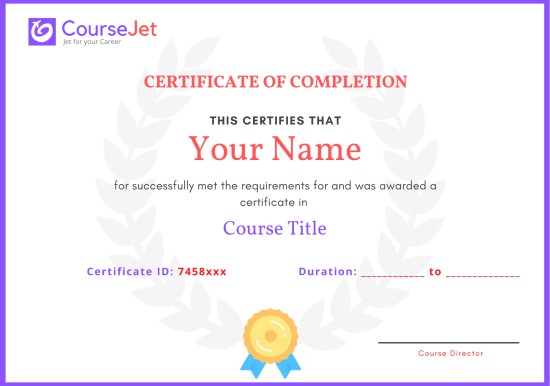
certificate

Kubernetes certification training helps learners develop knowledge of container orchestration, cluster administration, application deployment and cloud-native security. The Linux Foundation and Cloud Native Computing Foundation (CNCF) offer recognised Kubernetes certification pathways, including:

  • Certified Kubernetes Administrator (CKA): Assesses skills in cluster architecture, installation, configuration, networking, storage and troubleshooting.
  • Certified Kubernetes Application Developer (CKAD): Focuses on designing, building, configuring and troubleshooting applications running on Kubernetes.
  • Certified Kubernetes Security Specialist (CKS): Covers Kubernetes security, cluster hardening, workload protection and security monitoring. Candidates must satisfy the applicable CKA prerequisite.

CourseJet’s Kubernetes Online training introduces workloads, networking, storage, RBAC, Helm and troubleshooting. These topics can support certification preparation when combined with practical experience and study aligned with the official examination objectives. Official Kubernetes certifications are awarded through the relevant Linux Foundation certification programme after candidates meet the examination requirements. Any CourseJet course completion certificate, where available, is separate from an official Kubernetes certification. Learners should verify current examination details through The Linux Foundation Certification.

CourseJet’s Kubernetes Online Training provides structured instruction in container orchestration and cloud-native infrastructure through 100% live online instructor-led sessions. The course introduces Kubernetes architecture, Pods, Deployments, Services, networking, storage and cluster administration. Learners explore kubectl commands, YAML manifests, ConfigMaps, Secrets, RBAC, Helm and troubleshooting techniques. These subjects develop knowledge relevant to the Certified Kubernetes Administrator (CKA) and Certified Kubernetes Application Developer (CKAD) pathways.

Security concepts can also provide a foundation for further study towards the Certified Kubernetes Security Specialist (CKS) examination. CourseJet’s small-batch learning approach supports direct instructor interaction and opportunities to clarify technical questions. Candidates preparing for official examinations should review the current certification objectives and practise the required tasks in compatible Kubernetes environments. Certification success depends on individual preparation and examination performance.

CourseJet may provide a Kubernetes course completion certificate according to its established training policies. The exact requirements for receiving this certificate, including attendance, assessments or completion of learning activities, should be confirmed directly with CourseJet. Confirm CourseJet Certificate Availability, Assessment Criteria and Completion Requirements.

A CourseJet course completion certificate is different from an official Kubernetes certification issued through the Linux Foundation. Official credentials such as CKA, CKAD and CKS require candidates to satisfy the applicable examination and eligibility requirements. Learners should verify the certificate type, issuing organisation and completion conditions before enrolling. Completing CourseJet’s Kubernetes training does not automatically award an official vendor-neutral certification or guarantee examination success.

The recognition of a Kubernetes training certificate depends on its issuing organisation, verified accreditation arrangements and individual employer requirements. A CourseJet course completion certificate, where available, may demonstrate participation in structured training covering Kubernetes administration, container orchestration and application deployment.  However, it should not automatically be described as globally accredited or officially endorsed by the Linux Foundation or CNCF. Confirm CourseJet’s External Accreditation or Recognition Status.

Official Kubernetes certifications such as CKA, CKAD and CKS are separate credentials issued through the Linux Foundation certification programme. Employers may evaluate these credentials alongside practical Kubernetes experience, Linux administration skills, cloud knowledge and troubleshooting capabilities. Learners seeking externally recognised qualifications should verify current examination requirements directly through the official certification provider.

Get personalized 1-1 course consultation

Career-Focused Course Material and Personal Coaching to get Job.

Kubernetes Projects

CourseJet not only provides you with the best Kubernetes training but also makes you work with real-world projects and case studies to help you gain practical knowledge.

  • Practical knowledge is very important to understand how things actually work. To put your all learning into action, you will be required to work on two industry-based live projects that will discuss the real-time use cases.
  • CourseJet Kubernetes Training will help you gain in-depth knowledge of all the essential concepts of Kubernetes through real-world examples and hands-on projects.
  • We make each and every individual work on Kubernetes real-time projects to face challenges during the learning period so it will be very helpful to solve problems arising in organization while in the job. 
  • Working with real-time projects will make more efficient and you will get more doubts. This type of working procedure will help you achieve a lot more things in your career.

Develop a professional portfolio Now!

Complete real-time projects, to showcase your skills to employers.

Kubernetes Trainer Profile

You will learn the Kubernetes essentials from the expert’s trainers who hold 10+ years of real-time experience in handling diversified projects.

10+ Years Experienced

Our Kubernetes Trainers are more than 10+ Years of experience.

Working in Top MNCs

Our Kubernetes Trainers are Working in a top MNC company around the globe.

Trained 2000+ Students

Our Kubernetes Trainers are Trained more than 2000+ Students in Kubernetes Courses.

Certified Professionals

Our Kubernetes Trainers are certified Kubernetes Professionals with Strong Practical Knowledge.

Certification Guidance

Our Kubernetes Trainers will help you in getting International Certification if available.

Completed 700+ Batches

In CourseJet, we already finished many batches successfully with certifications.

Talk to our course Trainer now

Enroll now and get a free consultation with the trainer.

Kubernetes Training Reviews

Our Best Kubernetes Teaching methodology has acquired millions of students around the globe and they shared their success stories in the form of reviews.

✎ 2359
Total Reviews
✪ 4.9
Review score
✉ 99%
Course Completions

Kubernetes Jobs & Placements

CourseJet has tie-up with small, medium, and large scale corporations across the world. We provide you with the complete placement assistance by forwarding your resume to the companies we tie-up with.

Kubernetes skills are relevant to organisations deploying containerised applications, operating cloud-native platforms and managing enterprise infrastructure. Professionals with knowledge of Kubernetes architecture, workload orchestration, networking and security may pursue opportunities in DevOps, cloud engineering and platform operations. Relevant job roles include Kubernetes Administrator, DevOps Engineer, Cloud Engineer, Platform Engineer and Site Reliability Engineer. Employers may seek professionals who can deploy applications, configure Kubernetes resources, manage access controls and troubleshoot production workloads.

Knowledge of Linux, Docker, Helm, Git, CI/CD pipelines, Terraform, networking and cloud platforms can strengthen a candidate’s technical profile. Kubernetes expertise is useful in financial services, telecommunications, e-commerce, healthcare and enterprise software development. CourseJet’s live online training helps learners understand Kubernetes operations and develop knowledge applicable to professional infrastructure responsibilities. Candidates preparing for employment should practise workload deployment, resource configuration, cluster troubleshooting and application monitoring. Confirm CourseJet’s CV Guidance, Interview Preparation, Career Mentoring, Job Opportunity Updates and Placement Assistance Services.

The availability and scope of placement assistance following CourseJet’s Kubernetes Oline Training should be confirmed directly with the institute. Confirm CourseJet Placement Assistance Services, Eligibility and Conditions. Depending on the services actually offered, career assistance may include CV preparation guidance, technical interview preparation, career counselling or information about relevant employment opportunities.

Learners should request details about eligibility, the duration of assistance and any applicable limitations before enrolling. Completing Kubernetes training can contribute to career preparation, but it does not guarantee interviews, employment offers or placement with a particular employer. Practical knowledge of Kubernetes administration, container deployment, networking and troubleshooting remains important when pursuing DevOps and cloud engineering positions.

Learning Kubernetes can support applications for positions involving container orchestration, cloud infrastructure and application operations. Relevant junior opportunities may include Junior DevOps Engineer, Cloud Support Engineer, Kubernetes Support Associate and Infrastructure Operations Engineer, depending on employer requirements. Experienced professionals may pursue roles such as Kubernetes Administrator, DevOps Engineer, Cloud Platform Engineer, Platform Engineer and Site Reliability Engineer.

Employers may expect knowledge of Pods, Deployments, Services, storage, RBAC, networking and cluster troubleshooting. Experience with Linux, Docker, Helm, Git, CI/CD pipelines, Terraform and cloud platforms can strengthen a candidate’s suitability. Candidates should practise deploying applications, investigating failed workloads, configuring networking and explaining Kubernetes architecture. Professional certifications such as CKA and CKAD may complement demonstrable technical experience. Training alone does not guarantee employment, and production infrastructure roles may require substantial practical experience.

Salaries for Kubernetes professionals vary according to country, city, experience, employer, industry and technical responsibilities. Relevant job titles include Kubernetes Administrator, DevOps Engineer, Cloud Engineer, Platform Engineer and Site Reliability Engineer. Entry-level infrastructure support professionals generally have different compensation expectations from experienced engineers responsible for production Kubernetes clusters, platform architecture and infrastructure reliability. Skills in Kubernetes, Linux, container networking, storage and cluster security may influence earning potential.

Additional expertise in AWS, Microsoft Azure, Google Cloud, Terraform, Helm, GitOps and CI/CD technologies can support progression into specialised positions. Professional certifications such as CKA, CKAD and CKS may complement practical experience, although compensation depends on responsibilities and market conditions. Because no target employment location or verified current salary dataset has been specified, a reliable average salary figure cannot be provided. Learners should consult recent, location-specific salary information for Kubernetes Administrator, DevOps Engineer and related cloud platform positions.

Get your dream job in a month

Join the program to meet the Industries recruitment process

FAQ of Kubernetes Training

CourseJet FAQs are designed to clear most of your doubts and also help you build power in yourself to get clarified with the rest of doubts related to that course.

Yes, We offering group discounts when you join as more than three people 10% to 30% Price discount will be provided. We also have a referral discount for those who have already enrolled in our training. Terms and conditions apply.

Yes, we will share sample recordings of this course which was recorded during the live class. It will give you a good idea about the classes and the training sessions. 

You need not worry if you miss a class because CourseJet provides live recordings of the sessions so that you can go through them just before you attend the next session. If it is one to one training classes then will be rescheduled at your convenience. 

CourseJet is the Best Online Training platform, it provides high-class services for the learners. CourseJet provides Job Assistance for the learners and also helps them in getting placed in top MNCs around the world. CourseJet offers 24/7 support, best course material, and videos.

The different modes of training offered by CourseJet are as follows:

  • Instructor-led training
  • Corporate training
  • Self-paced training

Upon successful completion of this training, you will receive Course Completion Certification from CourseJet. It is a Globally Recognized Certification in top MNCs across the world. CourseJet certification is also recommended by top experts.

Yes, CourseJet provides 100% job assistance for the learners to help them get placed in top MNCs. Our trainers will help to create perfect resumes, will share the top interview questions, tutorials and necessary software installation guides.

CourseJet Job assistance program will train you to achieve your dream job by referring your resume to tied up companies and also assisting with preparing your resumes and providing important interview questions. We will help you in the all dimension between you and recruiters companies and the final selection decisions is always depends on the recruiter by the candidate’s performance in the interview. 

Yes, it is possible by paying some extra charges and can continue learning the course from the next batch.

The system requirements required to attend this training are:

  • An operating system such as Mac OS, Windows, Linux.
  • 4 GB RAM
  • Dual-core CPU

We are Experts in corporate training by Upgrading your team member’s skills. So, please get in touch with our team through fillup the corporate training Form or contact us via our Mail Id or Phone. 

Payments can be made using any of the following options like Debit Card / Credit Card, American Express, Master Card, or PayPal and a receipt of the same will be issued to you automatically via email. 

Looking for Group Discounts?

Enroll now and get a group discounts upto 30%

Related Courses

CourseJet provides training for a large number of courses. We have more than 250+ courses on our website and also provide assistance for the participants in suggesting the best training course.

© 2026 Digivigor Pvt. Ltd. All rights Reserved. The certification names are the trademarks of their respective owners. All trademarks are properties of their respective owners. View Our Disclaimer for more details. 

Hyperion Planning Training Course

🚀Fill Up & Get Free Quote