Manual Testing Certification Training

Ratings: 4.9 - 2,278 reviews
Rated 5 out of 5

Manual Testing Online training at CourseJet helps learners develop the skills required to test software applications, identify defects and ensure software quality. This course introduces software testing fundamentals, SDLC, STLC, test case design, test execution, defect management and different testing methodologies. Learners explore functional testing, regression testing, integration testing, system testing and user acceptance testing, along with tools such as Jira and other commonly used defect-tracking platforms. Through 100% live online instructor-led training, participants can understand testing concepts, discuss technical scenarios and improve their software quality assurance skills. The course is suitable for fresh graduates, aspiring software testers, QA professionals and developers who want to strengthen their knowledge of manual software testing and build relevant industry skills.

2425+

Total Learners

30 Hrs

Course Duration

15 Hrs

Assignments Duration

100%

Job Oriented Training

24/7

Students Support

CourseJet's Training Modes

Learn from World’s top Manual Testing Certified faculty and industry leaders

Online Batch Training

One To One Training

Customized Training

Fast Track Training

Corporate Training

Upcoming Batch Schedule

Check out our Manual Testing online certification batch timings. Does this batch not suits your timings? No worries, we will customize and arrange the batch timings that match you perfectly to your interest.

16-11-2026

Weekdays Regular (Class 1Hr - 1:30Hrs) / Per Session. (Monday - Friday) Time: 08:00 AM (IST)
WEEK DAY

14-11-2026

Weekend Regular (Class 3Hrs) / Per Session. (Saturday - Sunday) 11:00 AM (IST)
Week End

19-11-2026

Weekdays Regular (Class 1Hr - 1:30Hrs) / Per Session. (Monday - Friday) Time: 08:00 AM (IST)
WEEK DAY

15-11-2026

Weekend Regular (Class 3Hrs) / Per Session. (Saturday - Sunday) 11:00 AM (IST)
Week END

16-11-2026

Weekdays Fast-track (Class 3Hrs - 4Hrs) / Per Session. (Monday - Friday) 10:00 AM (IST)
FAST TRACK

14-11-2026

Weekend Fast-track (Class 5Hrs - 6Hrs) / Per Session. (Saturday - Sunday) 11:00 AM (IST)
Fast Track

Can’t find a batch you were looking for?

Get Flexible Batch Timings according to your Interest 

Best Manual Testing Certification Online Course

Manual Testing Online training provides a structured understanding of software quality assurance and the processes involved in validating applications before release. Manual testing is an essential software testing approach in which testers execute test cases without relying on automated test scripts to identify functional issues, usability problems and unexpected application behaviour.

The course introduces software testing principles, Software Development Life Cycle (SDLC), Software Testing Life Cycle (STLC), test planning, test scenario creation and test case documentation. Learners also explore black-box testing techniques, boundary value analysis, equivalence partitioning and exploratory testing. Important testing activities include functional testing, smoke testing, sanity testing, integration testing, system testing, regression testing and user acceptance testing. Defect reporting and tracking using tools such as Jira help learners understand how testing teams communicate issues with developers.

Manual testing is widely used in banking, healthcare, e-commerce, insurance, telecommunications and enterprise software development. CourseJet delivers 100% live online instructor-led training to help learners understand testing workflows, improve defect identification skills and develop knowledge relevant to software quality assurance roles.

Benefits of Learning Manual Testing at CourseJet

Looking for Hands-On Training?

Get Practical Assignments and Real time projects

Drop us a Query

About Manual Testing Course

Manual Testing is a software quality assurance discipline that involves evaluating an application manually to determine whether it meets specified business and technical requirements. Testers interact with application interfaces, execute test cases, compare actual results with expected results and report defects to the development team. The Software Testing Life Cycle consists of several activities, including requirement analysis, test planning, test case development, test environment preparation, test execution and test closure. Each phase helps testing teams organise their work and maintain software quality throughout development.

An important part of manual testing is test case design. Techniques such as equivalence partitioning, boundary value analysis, decision table testing and state transition testing help testers identify meaningful test conditions. These techniques are particularly useful when validating complex business rules and application inputs. Manual testers also work with different testing levels and types. Unit testing, integration testing, system testing and acceptance testing help evaluate software at different stages. Functional and non-functional testing approaches provide additional coverage for application behaviour, usability and performance-related requirements.

In professional environments, testers collaborate with developers, business analysts, product owners and QA managers. They use test management and defect-tracking tools to document test results, prioritise defects and monitor resolution. Knowledge of APIs, databases, SQL queries and Agile methodologies can further strengthen a manual tester’s technical capabilities.

The main objective of Manual Testing training is to develop the technical knowledge and practical understanding required to evaluate software applications systematically. Learners become familiar with software testing methodologies, test documentation and defect management processes.

Key learning objectives include:

  • Understand software testing fundamentals and quality assurance principles.
  • Learn SDLC and STLC phases and their importance.
  • Identify functional and non-functional testing requirements.
  • Prepare test scenarios, test cases and test data.
  • Apply boundary value analysis and equivalence partitioning.
  • Understand smoke, sanity, regression and integration testing.
  • Execute test cases and compare actual and expected results.
  • Report, track and manage software defects using defect-tracking tools.

These objectives help learners understand how software testing teams maintain application quality and identify issues before software releases.

Learning Manual Testing can help individuals develop skills relevant to software quality assurance and application testing. Organisations across banking, healthcare, retail, finance and technology require testing professionals to validate application functionality and identify software defects.

The knowledge gained through training can support career opportunities such as Manual Tester, Software Test Engineer, QA Analyst and Test Analyst. Employers commonly look for skills in test case preparation, defect reporting, requirement analysis, regression testing and test execution.

Manual testing knowledge also complements other technical skills, including SQL, API testing, Agile methodologies and automation testing. Professionals can gradually expand their expertise into specialised QA areas as they gain project experience. Career progression depends on technical ability, practical experience, communication skills and organisational requirements.

Manual Testing training is suitable for individuals interested in software quality assurance, application validation and software testing careers.

The course is relevant to:

  • Fresh graduates: Individuals looking to begin a career in software testing.
  • Aspiring software testers: Learners interested in manual testing fundamentals.
  • Software developers: Professionals who want to understand application validation and defect identification.
  • QA professionals: Testers looking to strengthen their testing methodology knowledge.
  • IT professionals: Individuals planning to move into software quality assurance.
  • Business analysts: Professionals interested in understanding software requirements and acceptance testing.
  • Technical support professionals: Individuals seeking to develop software testing skills.
  • Automation testers: Professionals who want to strengthen their understanding of manual testing principles.

Manual Testing training is suitable for beginners, including fresh graduates and individuals without previous professional testing experience. Basic computer knowledge and familiarity with using software applications are helpful. Understanding basic software development concepts can make it easier to follow SDLC and STLC topics, but advanced programming knowledge is not generally required for learning manual testing fundamentals. Previous experience in IT, software development or technical support can be beneficial but is not essential for introductory learning. Learners should have a computer and a reliable internet connection to participate in live online sessions. Specific software installation requirements can be confirmed before enrolment.

CourseJet’s batch size for Manual Testing training requires confirmation before enrolment. Where the small-batch arrangement is available, the batch consists of 2 to 3 members only. Smaller groups can provide more opportunities for interaction with the instructor, asking technical questions and clarifying testing concepts. Learners can discuss test case preparation, defect life cycles and software testing scenarios during the sessions. One-to-one training availability and the applicable batch arrangements should be confirmed with CourseJet’s training team.

Launch your dream career Now!

Get personalized career coaching & mentors from industry

Manual Testing Course Curriculum

Our Manual Testing Course Curriculum encompasses all the course modules with a clear description and the concepts covered in each module. CourseJet designs the syllabus in the learner's perspective to provide comprehensive knowledge.

Introduction

  • What is Software Testing
  • Why do we need Testing
  • How to perform the Testing
  • Benefits of Testing

Software Testing Terminologies

  • Mistakes, Faults, Bugs & Failures
  • Priority & Severity
  • Debugging & Root Cause Analysis
  • Verification & Validation
  • Test Bed/Environment
  • Mock-ups
  • Test Scenario

Quality Assurance & Quality Control

  • What is Quality Assurance
  • What is Quality Control
  • Quality Assurance vs Quality Control

Software Testing as a Career

  • Best testing practices used in Software Industry
  • Software Tester Roles
  • Job Responsibilities of a Software Tester
  • Why choose Software Testing as a career
  • How training can help you to become a Software Tester
  • Requirement and Analysis
        • Requirement Gathering
        • SRS Creation
        • Feasibility Study
        • Requirement Validation
        • SRS Approval
        • Project Kick-off
        • Application Walkthrough
        • Requirement Analysis
  • Design Concepts in Software Testing
        • System Design
        • Architecture Design
        • Module Design
  • Coding/Development
  • Testing
  • Implementation/Live
  • Software Testing Life Cycle (STLC)
        • Requirements analysis
        • Test planning
        • Test development
        • Test execution
        • Test reporting
        • Test result analysis or Defect Analysis
        • Retesting
        • Regression testing
        • Test Closure
  • SDLC Vs STLC
      • What is The Difference
      • Which is better What to choose

Software Testing Models

  • Waterfall Model
  • Iterative Model
  • Prototyping Model
  • Progressive Model
  • Spiral Model
  • V-Model
  • RAD (Rapid Application Development)

Agile Methodology

  • What is Agile
  • Why choose Agile Methodologies

Scrum Role in Agile

  • Product Owner
  • Scrum Master
  • Scrum Team

Work Products

  • Product Backlog
  • Spring Backlog
  • Burndown Chart

Ceremonies

  • Sprint Planning Meeting
  • Daily Scrum Call
  • The Sprint
  • Sprint Review
  • Sprint Retrospective
  • Scrum of Scrums

Testing Methodologies

  • Black Box Testing
  • Boundary Value Analysis
  • White Box testing
  • Path Testing
  • Mutation Testing
  • Testing Levels
  • Testing Types
  • How to choose them
  • Signification of Different Testing Types
  • Unit Testing
  • Integration Testing
  • Re Testing
  • Regression Testing
  • Usability Testing
  • Performance Testing
  • Software Stress Testing
  • Security Testing
  • Smoke Testing
  • Compatibility Testing
  • System Testing
  • UAT (User Acceptance Testing)
  • Alpha & Beta Testing
  • Test Cases
  • Review Process
        • Peer Review
        • Walkthrough
        • Inspection
  • Bug/Defect Management
        • Bug/Defect Lifecycle
        • Bug Tracking through Tool (Jira/Bugzilla)
  • Test Plan
        • Introduction
        • Test Objective
        • Test Environment
  • Scope of Testing
        • Modules to be Tested
        • Modules not to be Tested
        • Types of Testing
        • Levels of Testing
  • Testing Schedule
        • Entry Criteria
        • Testing Flow
        • Test Deliverables
        • Defect Tracking
        • Task Management
        • Suspension/Resumption Criteria
        • Risk & Mitigation Plan
        • Completion/Exit Criteria
  • Test Design Checklist
  • Test Execution Checklist
  • Cross Browser Testing

Introduction to Project Life Cycle

  • Identify Testing Artifacts
  • Test Strategy
  • Test plan
  • Software Test Life Cycle (STLC)
  • Prepare Test Case
  • Optimizing Test Cases (Testing Techniques)
  • Bug Reporting and Management
  • Application Sign Off

Live Project

  • Requirement Analysis
  • Prepare Query Log
  • Writing Test Cases
  • Review of Test Cases
  • Execution of Test Cases
  • Bug Finding & Reporting

ISO and CMMI Certifications, its significance

Software Testing Fundamentals

  • Why is Testing Necessary
  • What is Testing
  • Seven Testing Principles
  • The Psychology of Testing
  • Code of Ethics

Testing Throughout the Software Life Cycle

  • Software Development Models
  • Test Levels
  • Test Types
  • Maintenance Testing

Static Techniques

  • Static Techniques and the Test Process
  • Review Process
  • Static Analysis by Tools

Test Design Techniques

  • The Test Development Process
  • Categories of Test Design Techniques
  • Specification-based or Black-box Techniques
  • Structure–based or White-box Techniques
  • Experience-based Techniques
  • Choosing Test Techniques

Test Management

  • Test Organization
  • Test Planning and Estimation
  • Test Progress Monitoring and Control
  • Configuration Management
  • Risk and Testing
  • Incident Management

Tool Support for Testing

  • Types of Test Tools
  • Effective Use of Tools: Potential Benefits and Risks
  • How to Introduce a tool into an Organization

Java Course

  • Introduction to java
        • What is java
        • Programming language hierarchy
        • Java files
        • Camel casing
        • Identifiers
        • Java Components naming standards
        • Java source file declaration rules
        • First Java program
  • Classes and Objects
        • Introduction to Classes and objects
        • Understanding Java Heap
        • Creating first Class and Object
  • Variables and Operators
        • Introduction to Variables and their data types
        • Primitive and Non-primitive variables
        • Variable Casting
        • Object references
        • Java Operators
  • Java Methods and their communication
        • Introduction to methods
        • Method arguments and return types
        • Pass by Value
        • Encapsulation
        • Getters and Setters
  • Loops and Arrays
        • If-else statement
        • While loop
        • Do-while loop
        • For loop
        • Enhanced for loop
        • Arrays – 1D and 2D
        • Reference in an array
  • Understanding Java-API
        • Understanding API using ArrayList
        • ArrayList fundamentals
        • Using Java Library
        • Using Packages
        • Using HTML- API docs
  • Inheritance and Polymorphism
        • Understanding inheritance and inheritance tree
        • Methods overriding and the rules
        • IS-A and HAS-A relationship
        • Super class Vs Subclass
        • Method Overloading
        • Access Modifiers
  • Abstract Classes and Interfaces
        • Abstract classes and methods
        • Mother of all classes – “Object class”
        • Polymorphic reference
        • Object reference casting
        • Deadly Diamond of Death
        • Interfaces and it’s implementation
  • Garbage Collection and Constructors
        • Concept of Stack and Heap
        • Methods and classes on Stack and Heap
        • Constructors
        • Constructor Overloading
        • Constructor chaining and this() keyword
        • Garbage collection eligibility
  • Statics and data formatting
        • Static methods, variables and constants
        • Math class and methods
        • Wrapper classes
        • Auto boxing
        • Data formatting and static imports
  • Exception handling
        • Risky java codes
        • Introduction to Java Exceptions
        • Catching exceptions using try/catch block
        • The finally block
        • Catching multiple exceptions
        • Handle or Declare law of exceptions
  • Serialization and file I/O
        • Saving objects state
        • Writing serialized object
        • I/O streams
        • Serializable interface
        • Deserialization
        • Java IO file
        • Reading/Writing a text file
  • Collections
        • Introduction to Java collections
        • Concept of generics
        • Lists
        • Sets
        • Map
        • Hashmap
  • JDBC
      • JDBC concepts and terminology
      • JDBC package
      • Creating connection to a DataBase
      • Accessing and manipulating tables using JDBC
      • Sql statements

Selenium WebDriver3.0

  • Introduction to Selenium WebDriver
        • What is WebDriver
        • Exploring Webdriver java docs
        • Downloading Webdriver jar files
        • Open Google home page through WebDriver
        • Exploring more features of WebDriver
        • WebDriver Features & Examples
        • Handling HTML Elements such as: Text box, Hyperlinks, Submit buttons,
        • Radio buttons, Check boxes, Dropdown etc
        • Finding Elements & text on a Webpage
        • Printing all links and other values from a webpage and HTML Elements
        • Using By class to find elements using different methods
        • Implement global wait
        • Running test in multiple browsers
        • Firefox profile
        • Running test in multiple profiles
  • Advance WebDriver Features
        • Simulating keypress events such as buttons such as Enter, page up, pagedown, backspace
        • Handling java script messages
        • Working with online captchas
        • Running the test with HTMLUnit driver
        • Online Webtables
        • Downloading and configuring chrome driver
        • How to find Xpaths through Chrome developer tool
        • Generating your own Xpaths
        • What if you don’t have firebug or firepath
        • Handling multiple pop ups/tabs in Chrome
        • Handling Mouse over Menus and Iframes
  • Ajax & Listeners
        • How to handle Ajax based applications
        • Browser navigate methods
        • Listeners
        • Mouse movements
        • Explore action class mouseover method
        • Working with Javascriptexecutor
          • Drag and Drop
          • Resizable
          • Handling Sliders
  • Flash Testing with Selenium WebDriver
      • What is flash/flex testing
      • Downloading and installing flash jar file
      • Automating flash player
      • Using different call methods of YouTube flash player

TestNG Framework

  • Integration and Execution of Test Suite using TestNG Framework
      • What is TestNg
      • Installing TestNg in Eclipse
      • TestNg Annotations
      • Understanding usage of annotations
      • Running a Test in TestNg
      • Batch Running of tests in TestNg
      • Skipping Tests
      • Parameterizing Tests – DataProvider
      • Assertions/Reporting Errors
      • TestNg Reports
      • Advantages over Junit

ReportNG Framework


Selenium Grid – Cross Plateform & Parallel Execution

  • Cross Browser and Cross Platform Testing using Web Driver
      • What is Selenium-Grid
      • How Selenium-Grid Works–With a Hub and Nodes
      • Configuring Selenium-Grid
      • Default Configuration
      • JSON Configuration File
      • Configuring Via the Command-Line Options
      • Node Configuration
      • Timing Parameters

Robot Class

Integration of Selenium with Jenkins

  • Installation and setup of Jenkins & Selenium project on your laptop.
  • Jenkins Overview.
  • Jenkins Plugins.
  • Jenkins Configuration for a Java-based Project.
  • Integration of Selenium and Jenkins CI.
  • Reporting and Validation in Jenkins.
  • Continuous integration and continuous testing
  • Test Execution.
  • SVN, Junit, Source Control, Ant, Maven Java integration.

Data Driven & Hybrid Test Automation Framework

  • Covers end to end steps followed while creating the framework:
      • Test Data files
      • TestCore class which loads Xls file, run selenium server through code and do other initialization
      • Object.Properties file to store Xpaths
      • Configuration Files
      • Skipping Test Cases
      • Screenshot Capturing
      • Emailing Test Results
      • Generating Reports
      • Generating Application and Selenium logs
      • Running framework automation through Maven

Database Testing – Java DataBase Connectivity JDBC

  • Installing MySQL Database
  • Java.Sql Package|JDBC Drivers
  • Connection Interface
  • Statement and Prepared Statement Interfaces
  • ResultSet Interface
  • Firing Select, Insert, Update and Delete queries with database using Java JDBC
  • Looping the ResultSet
  • Using Annotations of Junit/TestNg to establish connection with database when Using Selenium
  • What is database testing
  • Database testing through SQL
  • What is SQL
  • Basic SQL Queries
  • Create SQL Queries
  • Writing SQL Queries
  • SQL Where Clause
  • AND/OR clauses
  • Order By/Update/Delete database
  • Primary Key vs Foreign Key
  • Joining Tables
  • LEFT/RIGHT JOIN
  • Joining more than two tables- complex queries
  • Using Aggregation to determine data health
  • Foreign Key Problems
  • Using Sub-queries
  • Generating Test Data
  • Views and Indices

Mobile Testing Introduction

  • Overview of Mobility Testing
  • Mobile Application Development Process
  • Introduction to various Mobile platforms
  • Introduction to Various Apps, Mobile App, Web based App, Native App, Hybrid App

Mobile Testing Strategy

  • Device Emulator
  • Mobile Cloud Computing (Remote Real Devices)
  • Real Time Devices
  • Automation Tools
  • Emulators and its usage
  • Installation and un- installation of Android Emulator

Mobile Testing Approach

  • Mobility Application – Test Approach/Phases
  • Test Requirements
  • Test Planning
  • Test Environment setup
  • Test Design
  • Test Execution and Defect tracking
  • Test Reports and Acceptance

Mobile Testing Scope

  • Unit testing
  • Integration testing
  • Functional testing
  • Device conformance testing
  • System testing
  • Regression testing
  • Mobile browser compatibility testing
  • Performance testing

All the above concepts will be covered in Our Manual Testing Course. You will become a master in all the concepts of Manual Testing because our trainers will make you learn very effectively. Our main goal is to make students satisfied with the training and place them in the top companies.

Like the Course Curriculum?

Or need customized syllabus? Enroll Now & personalized it!

Manual Testing Course Features

CourseJet offers the best Manual Testing online training with advanced features. Our world-class features will provide zeal for the learners to enroll for top training courses.

Instructor-led Sessions

30 to 45 Hrs of Manual Testing Online Live Instructor-Led Classes.

Expertise Faculties

Our Faculties are working Manual Testing Professionals in MNC Companies.

Certification & Job Assistance

After Successful completion Manual Testing course you will receive Globally Recognized CourseJet Certificate.

100% Job Oriented Training

Manual Testing Live project based on any real time scenarios.

Lifetime Access

You get lifetime access which includes Manual Testing class recordings and Materials.

Flexible Schedule

We will provide you Convenient Class Batches with lifetime access to our 24x7 online support team.

Manual Testing Certification Training

Get the Globally Recognized Manual Testing certification training from CourseJet under the guidance of Manual Testing Experts. CourseJet teaches you all the Manual Testing concepts with global standards.

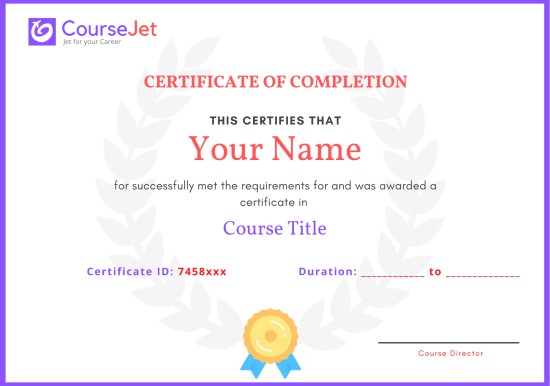
certificate

Manual Testing certification training helps learners develop knowledge of software testing principles and industry-standard quality assurance practices. One recognised professional certification pathway is the ISTQB Certified Tester Foundation Level (CTFL), offered through the International Software Testing Qualifications Board (ISTQB) certification scheme.

The ISTQB Foundation Level syllabus covers testing fundamentals, testing throughout the software development life cycle, static testing, test analysis and design, test management and testing tools. These subjects provide a structured foundation for understanding professional software testing practices.

CourseJet’s Manual Testing training can help learners develop knowledge relevant to these certification topics through instructor-led explanations of testing methodologies, test design techniques and defect management. Learners should understand the distinction between training completion and external certification. A CourseJet course completion certificate, if available, represents participation or completion of its training programme. ISTQB certification is a separate credential that requires meeting the applicable examination and certification requirements of the relevant certification body.

CourseJet’s Manual Testing Certification Programme is designed to help learners understand software testing concepts through 100% live online instructor-led training. The structured learning approach covers testing fundamentals, SDLC, STLC, test case design, test execution, defect reporting and different testing methodologies.

Instructor-led explanations can help learners understand technical terminology and the purpose of different testing techniques. Learners can develop knowledge of functional testing, regression testing, boundary value analysis and defect life cycle management.

The training also introduces certification-related concepts relevant to the ISTQB Foundation Level syllabus. This knowledge can support learners who intend to pursue an external testing certification. The programme focuses on developing software testing knowledge and professional skills rather than guaranteeing examination results or certification success.

CourseJet’s Manual Testing course completion certificate availability and award requirements should be confirmed directly with the training team. CourseJet certificate availability and completion criteria: Requires confirmation.

Where a CourseJet completion certificate is issued, it represents completion of the training programme under the provider’s requirements. Any applicable attendance, assessment or course completion conditions should be verified before enrolment.

This certificate is different from an external professional credential such as ISTQB Certified Tester Foundation Level (CTFL). ISTQB certification requires a separate examination process through the relevant certification arrangements. CourseJet training does not automatically award an ISTQB credential.

A CourseJet course completion certificate, if issued, demonstrates that a learner has completed the provider’s Manual Testing training programme. It should not automatically be considered equivalent to an internationally recognised professional certification.

Employers may evaluate training certificates alongside technical knowledge, practical testing skills, relevant work experience and interview performance. Recognition also depends on individual employer requirements and recruitment policies.

For learners seeking an external professional credential, the ISTQB Certified Tester Foundation Level (CTFL) is a separate certification pathway with its own syllabus and examination requirements. Learners should verify the accreditation, recognition and issuing organisation of any certification before enrolling or making career decisions.

Get personalized 1-1 course consultation

Career-Focused Course Material and Personal Coaching to get Job.

Manual Testing Projects

CourseJet not only provides you with the best Manual Testing training but also makes you work with real-world projects and case studies to help you gain practical knowledge.

  • Practical knowledge is very important to understand how things actually work. To put your all learning into action, you will be required to work on two industry-based live projects that will discuss the real-time use cases.
  • CourseJet Manual Testing Training will help you gain in-depth knowledge of all the essential concepts of Manual Testing through real-world examples and hands-on projects.
  • We make each and every individual work on Manual Testing real-time projects to face challenges during the learning period so it will be very helpful to solve problems arising in organization while in the job.
  • Working with real-time projects will make more efficient and you will get more doubts. This type of working procedure will help you achieve a lot more things in your career.

Develop a professional portfolio Now!

Complete real-time projects, to showcase your skills to employers.

Manual Testing Trainer Profile

You will learn the Manual Testing essentials from the expert’s trainers who hold 10+ years of real-time experience in handling diversified projects.

10+ Years Experienced

Our Manual Testing Trainers are more than 10+ Years of experience.

Working in Top MNCs

Our Manual Testing Trainers are Working in a top MNC company around the globe.

Trained 2000+ Students

Our Manual Testing Trainers are Trained more than 2000+ Students in Manual Testing Courses.

Certified Professionals

Our Manual Testing Trainers are certified Manual Testing Professionals with Strong Practical Knowledge.

Certification Guidance

Our Manual Testing Trainers will help you in getting International Certification if available.

Completed 700+ Batches

In CourseJet, we already finished many batches successfully with certifications.

Talk to our course Trainer now

Enroll now and get a free consultation with the trainer.

Manual Testing Training Reviews

Our Best Manual Testing Teaching methodology has acquired millions of students around the globe and they shared their success stories in the form of reviews.

✎ 2278
Total Reviews
✪ 4.9
Review score
✉ 99%
Course Completions

Manual Testing Jobs & Placements

CourseJet has tie-up with small, medium, and large scale corporations across the world. We provide you with the complete placement assistance by forwarding your resume to the companies we tie-up with.

Manual Testing knowledge can support career opportunities in software development companies, IT services, financial institutions, healthcare organisations and digital businesses. Organisations use manual testing to validate application functionality, identify defects and ensure that software meets business requirements.

Relevant job roles include Manual Tester, Software Test Engineer, Quality Assurance Analyst, Test Analyst and Junior QA Engineer. Experienced professionals may progress towards senior testing, QA lead or test management responsibilities depending on their technical knowledge and project experience. Employers commonly seek skills in test case preparation, test execution, defect reporting, regression testing, requirement analysis and test documentation. Familiarity with Jira, SQL, API testing and Agile workflows can provide additional professional value.

CourseJet’s 100% live online instructor-led training is intended to help learners develop software testing knowledge relevant to these roles. [Interview preparation, CV assistance, career mentoring and job opportunity updates: Availability requires confirmation.] Learners should also develop practical experience and communication skills to prepare for software testing recruitment processes.

The availability of placement assistance for CourseJet’s Manual Testing course should be confirmed with the training team before enrolment. Placement assistance details: Requires CourseJet verification. Where career support services are available, they may include interview preparation, guidance on presenting software testing skills and information about relevant job opportunities. Learners should clarify the scope, eligibility conditions and duration of any assistance offered. CourseJet training can help develop job-relevant knowledge, but placement support should not be interpreted as a guarantee of employment or a confirmed job offer.

Yes, learning Manual Testing can help you prepare for entry-level software testing opportunities, provided you also develop the practical and professional skills employers expect. Potential roles include Manual Tester, Junior Software Tester, QA Analyst and Software Test Engineer.

Employers commonly look for knowledge of test case design, functional testing, regression testing, defect reporting, SDLC and STLC. Familiarity with Jira, SQL, API testing and Agile methodologies can further strengthen your profile.

Fresh graduates can begin by developing a strong understanding of testing fundamentals and practising test documentation and defect identification. Experienced IT professionals can use manual testing knowledge to transition into quality assurance roles or expand their existing technical capabilities. Training alone does not guarantee employment. Practical experience, communication skills, problem-solving ability and interview preparation also influence recruitment outcomes.

Salary levels for Manual Testing professionals vary depending on location, experience, technical expertise, organisation and job responsibilities. In India, compensation can differ considerably between entry-level Manual Testers, experienced QA Engineers and senior testing professionals.

Common job titles include Manual Tester, Software Test Engineer, QA Analyst, Senior QA Engineer and Test Lead. Entry-level professionals generally need a strong foundation in software testing fundamentals, test case preparation and defect reporting. Experienced professionals may command higher compensation when they have additional expertise in SQL, API testing, Agile methodologies, test management and automation tools.

There is no single salary applicable to all Manual Testing certified professionals. Employers also consider practical project experience, industry knowledge and interview performance. Learners should evaluate current job advertisements and salary reports for their preferred location to understand prevailing compensation levels.

Get your dream job in a month

Join the program to meet the Industries recruitment process

FAQ of Manual Testing Training

CourseJet FAQs are designed to clear most of your doubts and also help you build power in yourself to get clarified with the rest of doubts related to that course.

Yes, We offering group discounts when you join as more than three people 10% to 30% Price discount will be provided. We also have a referral discount for those who have already enrolled in our training. Terms and conditions apply.

Yes, we will share sample recordings of this course which was recorded during the live class. It will give you a good idea about the classes and the training sessions. 

You need not worry if you miss a class because CourseJet provides live recordings of the sessions so that you can go through them just before you attend the next session. If it is one to one training classes then will be rescheduled at your convenience. 

CourseJet is the Best Online Training platform, it provides high-class services for the learners. CourseJet provides Job Assistance for the learners and also helps them in getting placed in top MNCs around the world. CourseJet offers 24/7 support, best course material, and videos.

The different modes of training offered by CourseJet are as follows:

  • Instructor-led training
  • Corporate training
  • Self-paced training

Upon successful completion of this training, you will receive Course Completion Certification from CourseJet. It is a Globally Recognized Certification in top MNCs across the world. CourseJet certification is also recommended by top experts.

Yes, CourseJet provides 100% job assistance for the learners to help them get placed in top MNCs. Our trainers will help to create perfect resumes, will share the top interview questions, tutorials and necessary software installation guides.

CourseJet Job assistance program will train you to achieve your dream job by referring your resume to tied up companies and also assisting with preparing your resumes and providing important interview questions. We will help you in the all dimension between you and recruiters companies and the final selection decisions is always depends on the recruiter by the candidate’s performance in the interview. 

Yes, it is possible by paying some extra charges and can continue learning the course from the next batch.

The system requirements required to attend this training are:

  • An operating system such as Mac OS, Windows, Linux.
  • 4 GB RAM
  • Dual-core CPU

We are Experts in corporate training by Upgrading your team member’s skills. So, please get in touch with our team through fillup the corporate training Form or contact us via our Mail Id or Phone. 

Payments can be made using any of the following options like Debit Card / Credit Card, American Express, Master Card, or PayPal and a receipt of the same will be issued to you automatically via email. 

Looking for Group Discounts?

Enroll now and get a group discounts upto 30%

Related Courses

CourseJet provides training for a large number of courses. We have more than 250+ courses on our website and also provide assistance for the participants in suggesting the best training course.

© 2026 Digivigor Pvt. Ltd. All rights Reserved. The certification names are the trademarks of their respective owners. All trademarks are properties of their respective owners. View Our Disclaimer for more details. 

🚀Fill Up & Get Free Quote