Java Certification Training Course

Ratings: 4.9 - 2,678 reviews
Rated 5 out of 5

Java Online training at CourseJet helps learners develop programming skills for building reliable, maintainable and scalable software applications. This 100% live online instructor-led programme introduces Core Java, object-oriented programming (OOP), exception handling, collections, multithreading, Java Database Connectivity (JDBC) and modern Java development practices. Learners explore Java syntax, classes, objects, inheritance, interfaces, generics, lambda expressions, the Stream API and database integration. The course also introduces development tools such as the Java Development Kit (JDK), IntelliJ IDEA or Eclipse, Maven and Git. CourseJet's interactive online sessions allow learners to clarify programming concepts, understand application development workflows and improve problem-solving skills. The programme is suitable for beginners, IT graduates, aspiring Java Developers, Software Engineers and professionals seeking to strengthen their programming knowledge. Learning Java provides a foundation for backend development, enterprise applications, APIs and broader software engineering careers.

2854+

Total Learners

30 Hrs

Course Duration

15 Hrs

Assignments Duration

100%

Job Oriented Training

24/7

Students Support

CourseJet's Training Modes

Learn from World’s top Java Certified faculty and industry leaders

Online Batch Training

One To One Training

Customized Training

Fast Track Training

Corporate Training

Upcoming Batch Schedule

Check out our Java online certification batch timings. Does this batch not suits your timings? No worries, we will customize and arrange the batch timings that match you perfectly to your interest.

09-11-2026

Weekdays Regular (Class 1Hr - 1:30Hrs) / Per Session. (Monday - Friday) Time: 08:00 AM (IST)
WEEK DAY

07-11-2026

Weekend Regular (Class 3Hrs) / Per Session. (Saturday - Sunday) 11:00 AM (IST)
Week End

12-11-2026

Weekdays Regular (Class 1Hr - 1:30Hrs) / Per Session. (Monday - Friday) Time: 08:00 AM (IST)
WEEK DAY

08-11-2026

Weekend Regular (Class 3Hrs) / Per Session. (Saturday - Sunday) 11:00 AM (IST)
Week END

09-11-2026

Weekdays Fast-track (Class 3Hrs - 4Hrs) / Per Session. (Monday - Friday) 10:00 AM (IST)
FAST TRACK

07-11-2026

Weekend Fast-track (Class 5Hrs - 6Hrs) / Per Session. (Saturday - Sunday) 11:00 AM (IST)
Fast Track

Can’t find a batch you were looking for?

Get Flexible Batch Timings according to your Interest 

Best Java Certification Online Course

Java Certification Training Online introduces the programming principles, development tools and software engineering concepts used to build applications with the Java programming language. Java is a general-purpose, object-oriented language widely used in enterprise systems, backend services, financial applications and distributed software platforms. Its platform independence is supported by the Java Virtual Machine (JVM), which executes compiled Java bytecode on compatible environments.

The course introduces Java syntax, control statements, methods, classes, interfaces, inheritance, polymorphism, encapsulation and abstraction. Learners also study exception handling, collections, generics, file handling and concurrent programming. Modern Java development involves features such as lambda expressions, the Stream API, records and other language capabilities supported by the chosen Java version. Development workflows commonly use JDK tools, integrated development environments, Maven or Gradle, and version control systems.

Java applications are used across banking, e-commerce, telecommunications, healthcare and enterprise software development. CourseJet’s live online instructor-led training helps learners understand Java programming concepts, application structure, debugging and development practices. The programme supports professional development in software engineering and provides foundational knowledge for learning frameworks such as Spring Boot and other Java ecosystem technologies.

Benefits of Learning Java at CourseJet

Looking for Hands-On Training?

Get Practical Assignments and Real time projects

Drop us a Query

About Java Course

The Java Online Course introduces the language features, programming techniques and application development practices used in modern Java software engineering. Java is a statically typed programming language that supports object-oriented development and provides extensive standard libraries for working with data, files, networking and concurrent operations. Java source code is typically compiled into bytecode using the Java compiler. The JVM executes this bytecode, while the Java Runtime Environment provides the components needed to run compatible applications. The JDK includes development utilities such as the compiler, debugger and other tools.

Object-oriented programming is central to Java application design. Developers use classes and objects to organise behaviour and data, interfaces to define contracts, and inheritance or composition to establish relationships between components. Exception handling provides structured mechanisms for responding to errors. The Java Collections Framework supports lists, sets, queues and maps. Generics improve type safety, while lambda expressions and streams enable functional-style operations. Java also provides concurrency capabilities, including threads, executors and synchronisation mechanisms.

Java is widely used for backend services, enterprise applications, payment processing, e-commerce platforms and distributed systems. Professional development commonly involves unit testing, dependency management, database access, APIs and frameworks such as Spring Boot. Understanding Core Java provides the technical foundation for learning these technologies and building maintainable applications.

Java Online Training aims to develop programming knowledge, object-oriented design skills and an understanding of professional Java development workflows. Learners study language fundamentals, Java APIs, application structure and debugging techniques.

The main learning objectives include:

  • Understanding Java Fundamentals: Learn variables, data types, operators, control statements, arrays and methods.
  • Applying Object-Oriented Programming: Understand classes, objects, inheritance, interfaces, polymorphism, encapsulation and abstraction.
  • Handling Exceptions: Learn checked and unchecked exceptions, exception propagation and structured error handling.
  • Working with Collections and Generics: Explore List, Set, Map, iteration, type parameters and collection operations.
  • Using Modern Java Features: Understand lambda expressions, functional interfaces, streams and selected contemporary language features.
  • Managing Files and Database Connectivity: Learn Java file operations and JDBC fundamentals.
  • Understanding Concurrency: Explore threads, executors, synchronisation and common concurrency challenges.
  • Developing and Debugging Applications: Learn compilation, execution, debugging, dependency management and basic testing practices.

These objectives support learners seeking to build a foundation in Java application development.

Learning Java can help you develop programming skills relevant to software development, backend engineering and enterprise application development. Java is used in banking, e-commerce, telecommunications, healthcare and technology services, where developers build applications, APIs and business systems. Learners may explore roles such as Junior Java Developer, Java Developer, Backend Developer, Software Engineer and Application Developer, depending on their qualifications and experience.

Employers commonly assess object-oriented programming, collections, exception handling, data structures, SQL and problem-solving abilities. Experienced developers may extend their knowledge towards Spring Boot, REST APIs, microservices, distributed systems and cloud platforms. Java also provides transferable programming concepts that can support learning other languages and technologies. Career progression depends on practical competence, software development experience, technical breadth and employer requirements. Completing a course alone does not guarantee employment or salary growth.

CourseJet’s Java Online Course is suitable for individuals interested in programming, software engineering and backend application development.

The programme may benefit:

  • IT Graduates: Learners developing foundational programming skills for software careers.
  • Aspiring Java Developers: Individuals interested in building Java-based applications.
  • Software Engineering Students: Learners seeking to strengthen object-oriented programming knowledge.
  • Beginners in Programming: Individuals willing to develop logical thinking and coding fundamentals.
  • Backend Development Aspirants: Learners planning to study Java APIs, Spring Boot and server-side development.
  • Software Testers: Professionals interested in Java-based test automation and programming.
  • Application Support Engineers: Individuals seeking to understand Java application behaviour and troubleshooting.
  • Developers from Other Languages: Professionals expanding their programming capabilities.
  • Working IT Professionals: Individuals preparing to transition towards Java development responsibilities.

Beginners can enrol in introductory Java training without previous professional programming experience. Basic computer knowledge, logical thinking and familiarity with file management are helpful when starting Java development. Understanding variables, conditions and loops from another programming language may make the learning process easier, but these concepts can also be introduced from the beginning.

Knowledge of object-oriented programming, SQL or web development is not essential for Core Java fundamentals. Learners should have access to a computer suitable for installing a supported JDK and development environment. The exact Java version, IDE, software requirements and any additional technical preparation should be confirmed with CourseJet before enrolment.

CourseJet provides Java Online Training in small batches of 2 to 3 learners. This approach supports direct interaction with the instructor and provides opportunities to clarify programming questions during live online sessions. Smaller batches encourage focused discussions about Java syntax, object-oriented programming, exception handling, collections and debugging techniques.

CourseJet also offers one-to-one instructor-led training for learners who prefer individual attention or explanations aligned with their programming experience. Participants can enquire about available batches, individual training arrangements and preferred session timings before enrolling. All training is delivered online, with schedules subject to instructor availability and confirmation.

Launch your dream career Now!

Get personalized career coaching & mentors from industry

Java Course Curriculum

Our Java Course Curriculum encompasses all the course modules with a clear description and the concepts covered in each module. CourseJet designs the syllabus in the learner's perspective to provide comprehensive knowledge.

Java Programming is a general-purpose and object-oriented programming language. It is mainly used to build desktop, mobile, and web applications. More than 3 billion devices run on Java worldwide. The Java programming language is very easy to understand and simple to code. 

Topics covered in this module are:

  • Overview of Java Programming
  • History of Java Programming
  • Key features of Java
  • Java vs C++

Learning Outcome: By the end of this module, you will get a clear understanding of Java Programming and how important it is in developing web and mobile applications

Java Programming is a general-purpose and object-oriented programming language. It is mainly used to build desktop, mobile, and web applications. More than 3 billion devices run on Java worldwide. The Java programming language is very easy to understand and simple to code. 

Topics Covered in this module are:

  • Step by step Java installation procedure
  • Setting the path for JDK
  • What are environmental variables
  • The setting of Java Path in Linux OS
  • Local Environmental Setup
  • Most popular Java Editors
  • Setting the path for Windows

Learning Outcome: In this section, you will get through the Java Software Installation procedure and also learn how to set up a path for JDK and Windows.

Core Java is a part of Java Programming Language that is mainly used to create and develop general-purpose applications. Core Java plays a key role in developing any advanced Java applications. Core Java applications make use of only one tier architecture so that it is called a stand-alone application.

Topics Covered in this module are:

  • Gain insights on core Java Concepts
  • How to develop and deploy applications using core Java programming
  • Different core Java applications
  • Key features of Core Java

Learning Outcome: By the end of this course module, you will gain in-depth knowledge of all the core Java Concepts and their key features.

Core Java Programming is a part of Java language. It is mainly used to develop and deploy general-purpose applications. Core Java applications make use of only one tier architecture so that it is called a stand-alone application.

Topics Covered in this module are:

  • Java Variables 
  • Data Types in Java
  • Different keywords used in Java Programming
  • What is Unicode System
  • Basic advanced Java Concepts

Learning Outcome: By the end of this section, you will get through all the core Java concepts in detail with real-time examples.

Java programming is the best platform to build mobile and desktop applications. Basic Java Program will let you know in detail about the structure of the Java program.

Topics Covered in this module are:

  • Public Class
  • Main() method
  • String[ ]args
  • Use of println()
  • Compilation Flow
  • Java Code
  • Byte Code
  • Create a hello world program
  • How to download and install JDK

Operators are the symbols in Java Programming they are mainly used to perform different operations like arithmetic, logical, assignment, etc on values and variables. There are different types of operators available in Core Java programming, you will know in detail about each of them in this module.

Topics Covered in this module are:

  • What is Operator Precedence
  • Arithmetic operators
  • Logical Operators
  • Unary Operator 
  • Bitwise Operators
  • Ternary Operator
  • Relational Operators
  • Shift Operator
  • Assignment Operators

Learning Outcome: By the end of this module, you will be in a position to perform different operations on variables using operators in Java Programming.

Control Statements in Java programming are mainly used to control the flow of the program. How the control statements determine the execution of the other statements in the program. 

Topics Covered in this module are:

  • If Statement
  • Nested if statement
  • If-else statement
  • If-else-if ladder
  • Switch 
  • Continue
  • Break

Learning Outcome: You will get a clear idea of Control flow statements and their importance in executing a sequence of statements in Java Programming. 

Looping Statements plays a key role in Java Programming. Looping statements get executed based on the given boolean condition. If the condition is satisfied the loop executes a set of statements in the Java Program. 

Topics Covered in this module are:

  • Use of Looping Statements in Java Programming
  • For loop
  • While Loop
  • Do-while loop
  • Example programs on Looping statements

Learning Outcome: By the end of this module, you will gain comprehensive knowledge of Looping Statements and their use in Java Programming. You will also get to know about how loops get executed based on the boolean condition.

Access Modifiers in Java programming are mainly used to specify the scope or accessibility of class, constructor, method, or field. These Access Modifiers are used to change the access levels of class, constructor, method, or field.

Topics Covered in this module are:

  • Public
  • Protected
  • Private
  • Default

Learning Outcome: You will get a clear idea of Access Modifiers and also understand where to use those access modifiers in Java Programming.

The OOPs concepts are considered as the essential section in Core Java. Object-Oriented programming concepts are used to improve and concise the program code by replacing huge lines of code with various keywords, methods, etc. 

Topics Covered in this module are:

  • Need for OOPs concepts in Java Programming 
  • Abstraction
  • Inheritance
  • Encapsulation
  • Polymorphism
  • Binding

Learning Outcome: You will gain expertise in different OOPs concepts and understand each concept with one example program to gain practical experience.

Class and object revolve around the real-time entities in the object-oriented programming. Class is defined as a template or blueprint whereas, the object is defined as an instance of a class. Objects are created for a class in Java Programming. 

Topics Covered in this module are:

  • Defining a class and object
  • How to create a class
  • Use of objects in the class
  • Role of the object in the object-oriented programming
  • How classes are used to define the behavior and state of the objects.

Learning Outcome: You will get to know in detail how Java Programming is completely based on classes and objects. You will also learn the use of classes and objects in Java Programming.

Inheritance in Java Programming is defined as one class acquiring the properties of another class which means a child class acquiring the properties of the parent class. Using the concept of inheritance you can create new classes based upon the existing classes. 

Topics Covered in this module are:

  • Inheritance in Java
  • Terms used in Java Inheritance
  • Code Reusability
  • Use of extends keyword
  • Types of Inheritance in Java
  • Multi-level Inheritance

Learning Outcome: You will get through the concept of inheritance in Java. You will gain an in-depth understanding of method overriding and code reusability.

In Java Programming, Constructor is mainly used to initialize the object’s state. A constructor is syntactically similar to a method and it has the same name as a class name. There are two different types of constructors in Java.

Topics Covered in this module are:

  • What is a Constructor
  • Rules for creating Java Constructor
  • Use of Constructor 
  • Parameterized Constructor
  • Non-Parameterized Constructor
  • Default Constructor
  • Constructor Overloading
  • Java Copy Constructor
  • Constructor vs Method in Java

Learning Outcome: In this module, you will get through the Java Constructor concept and also gain knowledge in creating constructors in core Java programming.

In Java Programming, Static Keyword is mainly used for memory management. The static keyword can be applicable for blocks, nested classes, variables, blocks, and methods. This keyword acts as a reference variable and is mainly used to refer to current objects (state and behavior).

Topics Covered in this module are:

  • Use of static keyword in Java Programming
  • Use of this keyword in Java Programming
  • How to refer to a class instance variable using this keyword.
  • Invoking the current class constructor
  • Examples of Static and This keyword

Learning Outcome: By the end of this module, you will be in a position to make use of static and this keyword in Java Programming. You will also notice the changes in the Java program after applying those keywords.

An Interface in Java Programming is silly used to specify the behavior of a class that must implement. Interface only contains constant declarations and method signatures. Implements keyword is used to represent the interface in Java Programming. The interface in Java Programming is also used to represent the IS-A relationship.

Topics Covered in this module are:

  • What is an Interface
  • Use of Interface in Java Programming
  • Interface Declaration
  • How Multiple Inheritance is achieved using an interface?
  • The relation between classes and interface

Learning Outcome: By the end of this section, you will gain in-depth knowledge of the interface in Java and also learn how to achieve multiple inheritances using the interface in Java programming.

In Java Programming, the class declared with the abstract is called an abstract class. It can have both non-abstract and abstract methods. An abstract class cannot be instantiated. 

Topics Covered in this module are:

  • What is an abstract class
  • Rules for an abstract class in Java
  • Abstract Methods in Java
  • What is Java Abstraction
  • Examples of Abstract class

Learning Outcome: By the end of this module, you will gain insights into the abstract class and rules for Java Abstract Class.

Polymorphism in Java is defined as a mechanism by which you can perform a single action in different ways. In general, polymorphism meaning is many forms. There are two types of polymorphisms in Java.

Topics Covered in this module are:

  • Method Overloading
  • Method Overriding
  • Dynamic Binding
  • Runtime Polymorphism
  • Super and final keyword
  • Use of instance of operator
  • Covariant Return Type

Learning Outcome: By the end of this module, you will gain in-depth knowledge of all polymorphism and techniques used to perform Dynamic Binding, Method Overloading, etc.

Basically, String is an object that is mainly used to represent a sequence of char values. An array of characters in Java also works the same as Java String. There are two different types of strings and they are mutable and immutable strings. The String is also an inbuilt class in Java. 

Topics Covered in this module are:

  • What is a String
  • String Concatenation
  • Java String Methods
  • String Buffer
  • String Literals
  • How to create String Objects

Learning Outcome: In this section, you will gain expertise in String Literals and different string methods in the core Java.

Exception Handling mechanism in Java programming is mainly used to handle runtime errors caused by unexpected events in the program.

Topics Covered in this module are:

  • What is an Exception
  • Types of Exceptions
  • Checked Exceptions
  • Unchecked Exceptions
  • Java Exception Classes
  • Exception Handling
  • Advantages of Exception Handling
  • Try and Catch Block
  • Java Exception index 

Learning Outcome: In this section, you will gain expertise in handling exceptions and the use of a try-catch block in exception handling.

Multithreading is defined as a process of executing multiple threads simultaneously. It mainly defines the ability of the CPU or an operating system like how they manage more than one user or a thread or a request at a time. Multithreaded applications are known as Concurrency in Java. Finally, the Multithreading process leads to maximum utilization of the CPU.

Topics Covered in this module are:

  • What is a thread
  • Multithreading
  • Multiprocessing
  • Process-based Multitasking
  • Java Thread Class
  • Java Thread Methods
  • Thread life cycle
  • How to create a thread

Learning Outcome: By the end of this module, you will gain expertise in Java Multithreading and learn the process to create a thread.

In Java Programming, the collection is defined as a framework that provides the platform to manipulate and store a group of objects. The collection is considered as a single unit of objects.

Topics Covered in this module are:

  • What is a framework
  • What is a collection framework
  • Collection Framework Hierarchy
  • Collection Interface methods
  • List interface
  • Iterator Interface
  • Vector
  • Stack
  • Queue and Deque interfaces
  • Set Interface

Learning Outcome: You will get a clear idea about Collections and its framework in Java Programming.

JDBC is abbreviated as Java Database Connectivity and it is a part of JavaSE. JDBC Drivers are used by JDBC API to connect with Database. 

Topics Covered in this module are:

  • What is JDBC
  • JDBC API
  • JDBC Drivers
  • Native Driver
  • JDBC ODBC Driver
  • Thin Driver
  • Network Protocol Driver
  • Need for JDBC

Learning Outcome: By the end of this section, you will gain in-depth knowledge of JDBC drivers and their key advantages and features. 

In Java Programming, Inner Class is defined as a class declared inside the interface or a class. They are mainly used to group interfaces and classes in one place. 

Topics Covered in this module are:

  • What is an Inner Class
  • Inner Class Syntax
  • Comparison between inner class and nested class
  • Different types of nested classes

Learning Outcome: At the end of this section, you will be in a position to understand inner classes clearly. You will also get familiar with an inner class syntax and its key features.

Java Swing provides lightweight and platform-independent components. Swing provides powerful components like scroll panes, lists, tables, etc. Java Swing follows the MVC model.

Topics Covered in this module are:

  • What is a Swing
  • Difference between AWT and Swing
  • Swing Components
  • Use of Java Foundation Class
  • Java Swing Classes Hierarchy
  •  Methods of Component Class 

Learning Outcome: In this section, you will learn in detail about Java Swing components and their methods.

Java AWT stands for Abstract Window Toolkit, it is an Application Program Interface used to develop window-based applications in Java. 

Topics Covered in this module are:

  • What is Java AWT
  • Hierarchy of Java AWT
  • Methods of the Component class
  • AWT by Inheritance

Learning Outcome: By the end of this section, you will gain in-depth knowledge of Java AWT and its components.

Java input and output are used to process the input and produce the output. Java uses the stream concept to make I/O operations faster.

Topics Covered in this module are:

  • I/O operations
  • Stream Concept
  • InputStream
  • OutputStream
  • InputStream vs OutputStream
  • OutputStream Methods
  • InputStream Methods
  • InputStream Hierarchy
  • OutputStream Hierarchy

Learning Outcome: By the end of this module, you will learn how to process I/O operations and also gain knowledge of the stream concept. 

All the above concepts will be covered in Our Java Course. You will become a master in all the concepts of Java because our trainers will make you learn very effectively. Our main goal is to make students satisfied with the training and place them in the top companies.

Like the Course Curriculum?

Or need customized syllabus? Enroll Now & personalized it!

Java Course Features

CourseJet offers the best Java online training with advanced features. Our world-class features will provide zeal for the learners to enroll for top training courses.

Instructor-led Sessions

30 to 45 Hrs of Java Online Live Instructor-Led Classes.

Expertise Faculties

Our Faculties are working Java Professionals in MNC Companies.

Certification & Job Assistance

After Successful completion Java course you will receive Globally Recognized CourseJet Certificate.

100% Job Oriented Training

Java Live project based on any real time scenarios.

Lifetime Access

You get lifetime access which includes Java class recordings and Materials.

Flexible Schedule

We will provide you Convenient Class Batches with lifetime access to our 24x7 online support team.

Java Certification Training

Get the Globally Recognized Java certification training from CourseJet under the guidance of Java Experts. CourseJet teaches you all the Java concepts with global standards.

certificate

The Java Online Course introduces the language features, programming techniques and application development practices used in modern Java software engineering. Java is a statically typed programming language that supports object-oriented development and provides extensive standard libraries for working with data, files, networking and concurrent operations. Java source code is typically compiled into bytecode using the Java compiler. The JVM executes this bytecode, while the Java Runtime Environment provides the components needed to run compatible applications. The JDK includes development utilities such as the compiler, debugger and other tools.

Object-oriented programming is central to Java application design. Developers use classes and objects to organise behaviour and data, interfaces to define contracts, and inheritance or composition to establish relationships between components. Exception handling provides structured mechanisms for responding to errors. The Java Collections Framework supports lists, sets, queues and maps. Generics improve type safety, while lambda expressions and streams enable functional-style operations. Java also provides concurrency capabilities, including threads, executors and synchronisation mechanisms.

Java is widely used for backend services, enterprise applications, payment processing, e-commerce platforms and distributed systems. Professional development commonly involves unit testing, dependency management, database access, APIs and frameworks such as Spring Boot. Understanding Core Java provides the technical foundation for learning these technologies and building maintainable applications.

Java Certification is the most valuable certification in the IT Sector. This Java Certification validates your skills in core Java and Advanced Java concepts. Professionals having certification in-hand will have intentionally high scope for job opportunities. Freshers or Professionals with Java Certification will have high demand in the market and many companies are also looking to hire certified Java Developers. 

CourseJet’s Java Certification Programme provides structured learning for individuals interested in Java programming, object-oriented design and software development. The programme introduces Java syntax, classes, interfaces, inheritance, collections, exception handling, generics and modern language features. These concepts help learners understand how Java applications are designed, compiled, executed and maintained. Live online instructor-led sessions provide opportunities to clarify technical questions involving programming logic, debugging, Java APIs and application behaviour.

The training is relevant to beginners, aspiring Java Developers and professionals seeking to strengthen their Core Java knowledge. Learners interested in Oracle Java certification can use these foundations to study the objectives of an appropriate examination. Additional preparation may be necessary for version-specific language features and examination requirements. External certification success depends on individual preparation and examination performance.

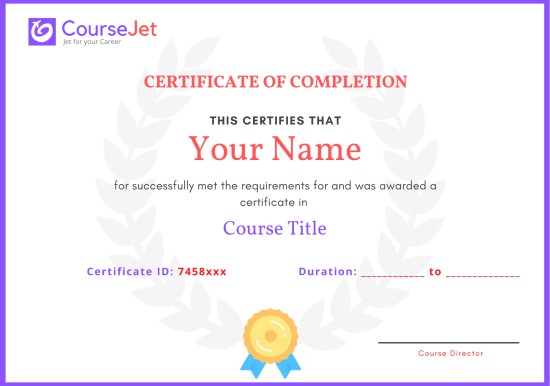
CourseJet’s Java course completion certificate, where available, may document participation in or completion of its instructor-led training programme. The exact requirements for receiving a certificate should be confirmed before enrolment. Certificate eligibility and assessment requirements: Confirm CourseJet Certificate Requirements. Learners should enquire whether attendance, completion of programming activities, technical assessments or other conditions apply.

A CourseJet completion certificate is different from an official Oracle Java certification. Oracle credentials require candidates to meet the applicable certification requirements and pass the relevant examination. Completing CourseJet’s Java training does not automatically award an Oracle certification. Learners should verify the certificate issuer, completion criteria and applicable conditions before enrolling.

A CourseJet Java course completion certificate, where issued, may document training in Core Java, object-oriented programming and application development fundamentals. However, a training provider’s certificate should not be described as internationally accredited or globally recognised without supporting evidence. CourseJet-specific external accreditation or international recognition: Confirm Accreditation or Recognition Status. Employers may evaluate training certificates alongside programming skills, technical assessments, professional experience and relevant qualifications.

Official Oracle Java certifications are separate vendor-issued credentials with defined examination and verification requirements. Learners should verify the current status of Oracle certifications through official Oracle resources and independently confirm any accreditation claims. Demonstrating practical Java programming competence, problem-solving ability and knowledge of modern software development practices remains important when pursuing professional opportunities.

Get personalized 1-1 course consultation

Career-Focused Course Material and Personal Coaching to get Job.

Java Projects

CourseJet not only provides you with the best Java training but also makes you work with real-world projects and case studies to help you gain practical knowledge.

  • Practical knowledge is very important to understand how things actually work. To put your all learning into action, you will be required to work on two industry-based live projects that will discuss the real-time use cases.
  • CourseJet Java Training will help you gain in-depth knowledge of all the essential concepts of Java through real-world examples and hands-on projects.
  • We make each and every individual work on Java real-time projects to face challenges during the learning period so it will be very helpful to solve problems arising in organization while in the job.
  • Working with real-time projects will make more efficient and you will get more doubts. This type of working procedure will help you achieve a lot more things in your career.

Develop a professional portfolio Now!

Complete real-time projects, to showcase your skills to employers.

Java Trainer Profile

You will learn the Java essentials from the expert’s trainers who hold 10+ years of real-time experience in handling diversified projects.

10+ Years Experienced

Our Java Trainers are more than 10+ Years of experience.

Working in Top MNCs

Our Java Trainers are Working in a top MNC company around the globe.

Trained 2000+ Students

Our Java Trainers are Trained more than 2000+ Students in Java Courses.

Certified Professionals

Our Java Trainers are certified Java Professionals with Strong Practical Knowledge.

Certification Guidance

Our Java Trainers will help you in getting International Certification if available.

Completed 700+ Batches

In CourseJet, we already finished many batches successfully with certifications.

Talk to our course Trainer now

Enroll now and get a free consultation with the trainer.

Java Training Reviews

Our Best Java Teaching methodology has acquired millions of students around the globe and they shared their success stories in the form of reviews.

✎ 2678
Total Reviews
✪ 4.9
Review score
✉ 99%
Course Completions

Java Jobs & Placements

CourseJet has tie-up with small, medium, and large scale corporations across the world. We provide you with the complete placement assistance by forwarding your resume to the companies we tie-up with.

Java skills are relevant to professional responsibilities involving backend development, enterprise applications, APIs and general software engineering. Organisations using Java technologies may require developers who understand object-oriented programming, collections, exception handling, concurrency, database connectivity and application debugging. Learners with Java knowledge may explore roles such as Junior Java Developer, Java Developer, Backend Developer, Software Engineer and Application Developer, depending on their qualifications and experience.

Employers may assess Core Java, data structures, algorithms, SQL, Git, testing and familiarity with frameworks such as Spring Boot. CourseJet’s live online instructor-led training helps learners understand programming fundamentals and technical concepts relevant to Java development. Developing complementary skills in REST APIs, relational databases, software testing, cloud platforms and application security can further support professional development.

CourseJet placement assistance, interview preparation, CV guidance, career mentoring and job opportunity updates: Confirm Available Career Support Services. Learners should enquire about the career-related services included in their programme. Employment depends on technical competence, practical experience and employer requirements. Java training alone does not guarantee a job.

CourseJet’s Java Online Training focuses on developing programming knowledge, object-oriented design skills and an understanding of Java application development. The availability and scope of formal placement assistance should be confirmed directly with CourseJet before enrolment. Placement assistance details: Confirm Placement Assistance Services. Learners can enquire whether interview preparation, CV guidance, career mentoring or information about relevant Java development vacancies is included in the programme.

Preparing for Java technical interviews may involve reviewing object-oriented programming, collections, exception handling, strings, multithreading, SQL and coding problems. Candidates should also develop familiarity with testing, Git and common backend development practices. CourseJet training does not guarantee employment, as hiring decisions depend on individual qualifications and employer requirements.

Learning Java can help individuals prepare for software development opportunities, but course completion alone is not sufficient to guarantee employment. Beginners may explore Junior Java Developer, Graduate Software Engineer, Application Developer or related entry-level positions, depending on their qualifications and employer requirements. Experienced professionals may pursue Java Developer, Backend Developer, Senior Software Engineer or Technical Lead responsibilities.

Employers commonly assess Core Java, object-oriented programming, collections, data structures, algorithms, SQL and debugging skills. Candidates can improve their recruitment readiness by developing programming applications, practising coding assessments and understanding software development workflows. Additional knowledge of Spring Boot, REST APIs, Git, automated testing, databases and cloud technologies can broaden employment opportunities. Practical competence, problem-solving ability, communication skills and relevant experience remain important. Completing Java training does not guarantee a job.

There is no single average salary applicable to all Java-certified professionals because compensation varies significantly by country, city, employer, experience and job responsibilities. Junior Java Developers, Graduate Software Engineers and Application Developers may have different salary expectations from experienced Backend Developers, Senior Java Engineers and Software Architects. Professionals responsible for enterprise systems, distributed applications, cloud infrastructure and complex backend services may have different earning potential from those working on smaller applications. Knowledge of Core Java, Spring Boot, REST APIs, SQL, microservices and cloud platforms can influence compensation.

Employers may also consider data structures, algorithms, system design, testing practices and production development experience. Oracle Java certifications may support professional development, but certification alone does not determine salary. For meaningful comparisons, candidates should review current job advertisements and compensation research for Java Developer and Backend Developer positions in their preferred location. No verified location-specific salary figure is included here. Learners should compare salaries using consistent currencies, experience levels and reference periods.

Get your dream job in a month

Join the program to meet the Industries recruitment process

FAQ of Java Training

CourseJet FAQs are designed to clear most of your doubts and also help you build power in yourself to get clarified with the rest of doubts related to that course.

Yes, We offering group discounts when you join as more than three people 10% to 30% Price discount will be provided. We also have a referral discount for those who have already enrolled in our training. Terms and conditions apply.

Yes, we will share sample recordings of this course which was recorded during the live class. It will give you a good idea about the classes and the training sessions. 

You need not worry if you miss a class because CourseJet provides live recordings of the sessions so that you can go through them just before you attend the next session. If it is one to one training classes then will be rescheduled at your convenience. 

CourseJet is the Best Online Training platform, it provides high-class services for the learners. CourseJet provides Job Assistance for the learners and also helps them in getting placed in top MNCs around the world. CourseJet offers 24/7 support, best course material, and videos.

The different modes of training offered by CourseJet are as follows:

  • Instructor-led training
  • Corporate training
  • Self-paced training

Upon successful completion of this training, you will receive Course Completion Certification from CourseJet. It is a Globally Recognized Certification in top MNCs across the world. CourseJet certification is also recommended by top experts.

Yes, CourseJet provides 100% job assistance for the learners to help them get placed in top MNCs. Our trainers will help to create perfect resumes, will share the top interview questions, tutorials and necessary software installation guides.

CourseJet Job assistance program will train you to achieve your dream job by referring your resume to tied up companies and also assisting with preparing your resumes and providing important interview questions. We will help you in the all dimension between you and recruiters companies and the final selection decisions is always depends on the recruiter by the candidate’s performance in the interview. 

Yes, it is possible by paying some extra charges and can continue learning the course from the next batch.

The system requirements required to attend this training are:

  • An operating system such as Mac OS, Windows, Linux.
  • 4 GB RAM
  • Dual-core CPU

We are Experts in corporate training by Upgrading your team member’s skills. So, please get in touch with our team through fillup the corporate training Form or contact us via our Mail Id or Phone. 

Payments can be made using any of the following options like Debit Card / Credit Card, American Express, Master Card, or PayPal and a receipt of the same will be issued to you automatically via email. 

Looking for Group Discounts?

Enroll now and get a group discounts upto 30%

Related Courses

CourseJet provides training for a large number of courses. We have more than 250+ courses on our website and also provide assistance for the participants in suggesting the best training course.

© 2026 Digivigor Pvt. Ltd. All rights Reserved. The certification names are the trademarks of their respective owners. All trademarks are properties of their respective owners. View Our Disclaimer for more details. 

🚀Fill Up & Get Free Quote